THE SEARCHLIGHT Vol. XIX, No. 42 – Investigative. Unflinching. Unmasking Power.
It began like the other nightmares. A school in Oyo State, once a quiet emblem of modest aspiration, was invaded by men whose faces were hidden but whose ideology was not. Pupils, teachers, and non-academic staff were herded into the bush like livestock. Within hours, the world received the grisly confirmation: one teacher had been beheaded. Not shot. Not taken. Beheaded. In the days since, sources from within the abductors’ camp have revealed that the remaining captives are being tortured, flogged, starved, and subjected to psychological terror. The jihadists responsible are not bandits in the old sense. They are organized, ideologically driven, and increasingly emboldened.
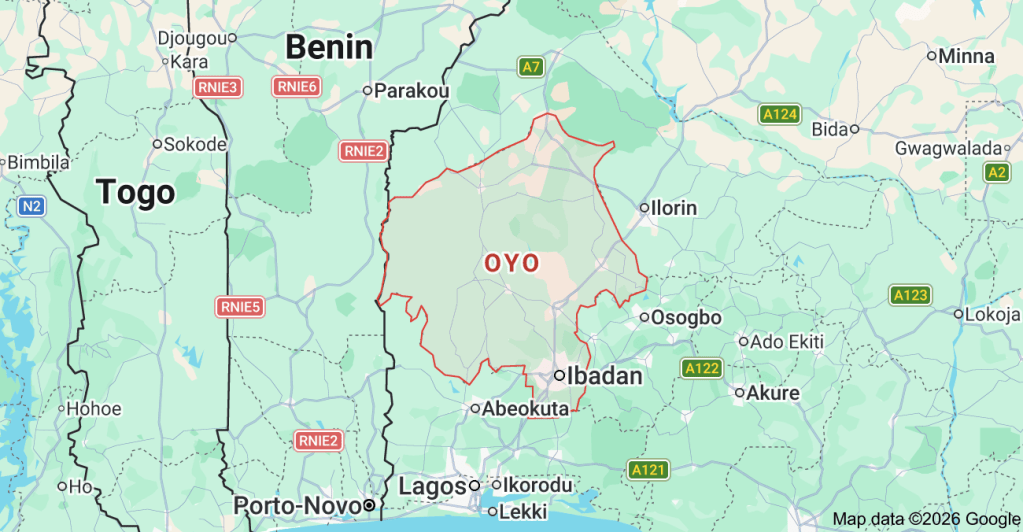
Yet, step outside this horror onto the streets of Ibadan, Ogbomoso, or Oyo town, and you will see what has become the most terrifying symptom of our national decay: life continues as if nothing happened. Markets are open. Politicians are holding rallies. The Yoruba Aso Ebi fabrics are still being sewn for weekend parties. The radio stations that once ran breaking news of the abduction now run adverts for soft drinks and miracle pastors.
This is not resilience. This is a nation that has normalised the abnormal until the abnormal has become the new routine.
And while children weep in captivity, the ruling government and its political class are locked in a frenzied dance over party primaries and succession plans. Who will be the presidential candidate? Who will be governor? Who will inherit which structure? The blood of that beheaded teacher is still wet on the floor of his school, but the politicians have already moved on, because his death, like the 300+ students abducted in Kuriga, like the Chibok girls, like the Greenfield University students, is not a tragedy to them. It is a political variable.
The Silence of Solutions
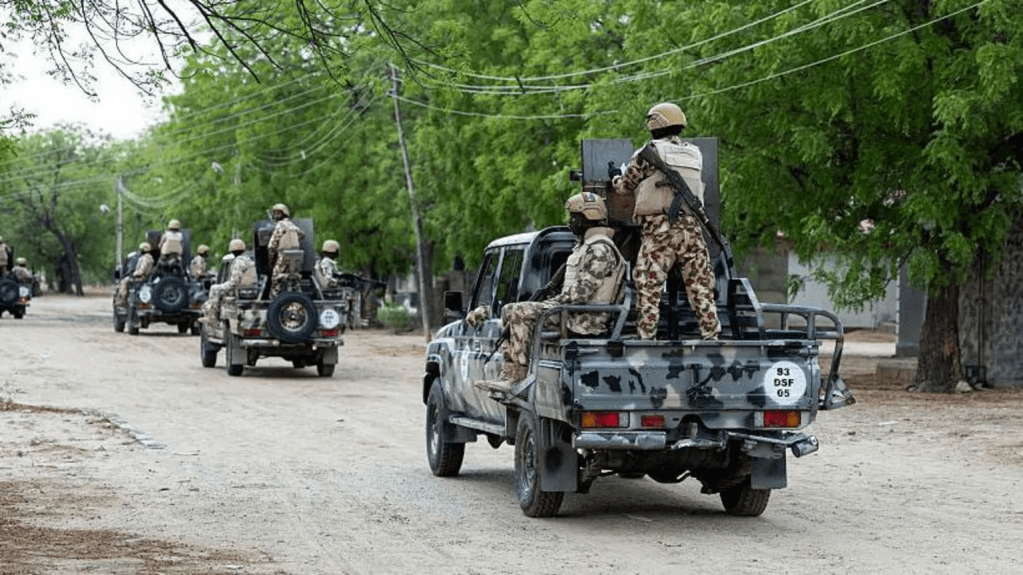
It is now a ritual: an abduction occurs. The government condemns it. The military issues a statement about “pursuing the criminals.” The police promise rescue. Civil society organises a candlelight vigil. The UN expresses concern. Then… nothing. The children are either killed, held for months, or released after a ransom that the government denies paying but which everyone knows was paid. No structural change follows. No demilitarisation of the forest corridors. No dismantling of the ideological networks. No accountability for intelligence failures.
Why? Because solutions would require confronting uncomfortable truths:
- That the Nigerian state is not too weak to defeat jihadists; it is selectively weak, depending on whose political constituency is affected.
- That there is an operational nexus between some political elites, security personnel, and the very non-state armed groups wreaking havoc.
- That the armed forces, for all their sacrifice, are compromised by poor funding, low morale, and in some cases, outright collusion.
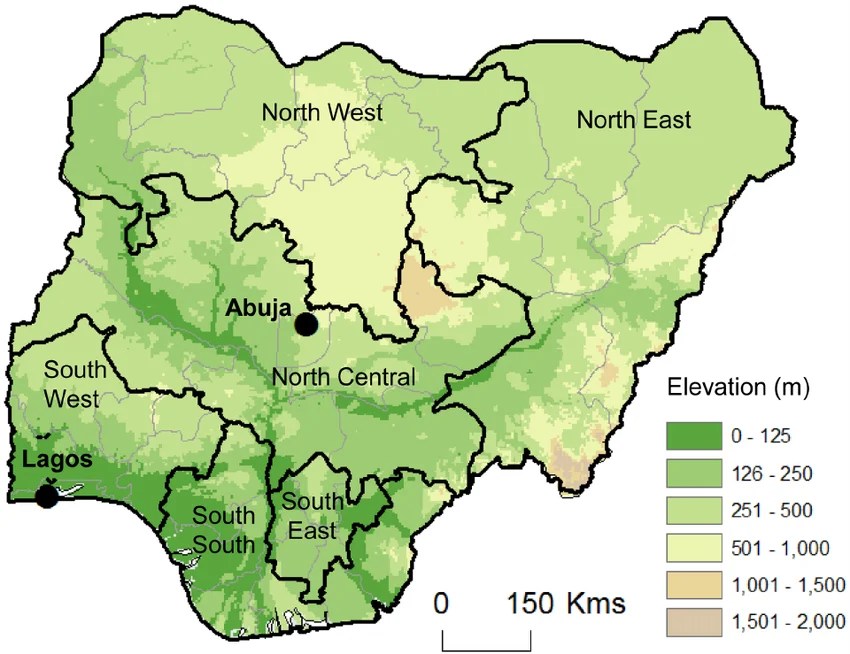
When an armed group can overrun parts of Niger State, then Kwara State, and now Oyo State, crossing geopolitical zones with impunity, it is not merely a security lapse. It is a geopolitical metastasis. The jihadists are not crawling; they are marching. And they know, as do the politicians, that South-West Nigeria has been largely unprepared for this onslaught, having long deluded itself that banditry and jihadism were “Northern problems.”
The Unspeakable Question: Collaboration?
Let us ask the question that polite society dares not utter: Are these not symptoms of collaboration between politicians in government, the armed forces, and the police to destabilise Nigeria completely?
We are not speaking of a cartoonish conspiracy, but of a systemic dysfunction that benefits too many powerful interests. Consider, for example:
- When security is poor, the government can justify emergency powers, increased military budgets, and the suspension of civil liberties.
- When abductions are rampant, private security becomes a booming industry, one in which retired generals and police commissioners hold shares.
- When a region is destabilized, elections can be postponed, voter turnout can be suppressed, and opposition strongholds can be cowed.
- When bandits are “managed” rather than eliminated, they become political tools, used to chase out rival ethnic groups, disrupt local government elections, or force communities to vote a certain way.
In the North-West and North-Central, there are documented cases of politicians hiring bandits to terrorize opponents. In the South-East, non-state armed groups have been infiltrated by political actors. Is it so far-fetched that the same logic now applies to jihadist factions? The government may not control them directly, but neither does it have the will to destroy them, because a fully secure Nigeria is not useful to those who profit from chaos.
The Primacy of Primaries
While the abductees rot, the ruling party is consumed by the question of who will succeed the current president. Political godfathers are flying private jets to Abuja. Delegates are being bribed in hotel rooms. Aspirants are releasing glossy manifestos that never mention the word “abduction” or “jihadist” or “beheading.” The opposition, too, is busy with its own internal coup plots. No one is campaigning on rescue. No one is asking: What will you do differently to prevent the next school raid?
This is because the political class has learned that Nigerian voters have a short memory and a high tolerance for horror. As long as fuel subsidies are paid, or removed and replaced with palliatives, as long as the exchange rate is managed just enough to prevent total collapse, as long as the elite’s children are in Swiss schools and their money in Dubai banks, the suffering of a few rural teachers and their pupils is a rounding error in the calculus of power.
What Is Really Happening in Nigeria?

Nigeria is not failing. It is being managed into failure by design. The jihadists, bandits, and kidnappers are not the sole authors of this crisis. They are co-authors, with silent partners in government, security institutions, and business. The state retains just enough capacity to prevent a total collapse, but not enough to end the terror. Why? Because total peace would expose the rot. It would force the government to actually deliver schools, roads, hospitals, and jobs. It would make elections about performance, not survival. It would mean the end of security votes, inflated defence contracts, and the political utility of fear.
The abduction in Oyo State is not an isolated attack. It is a stress test, to see how far the abductors can push into the South-West before facing real resistance. The answer so far: very far. The Oyo State Government has made the usual noises. The Amotekun corps, underfunded and politically hobbled, cannot match the jihadists’ firepower. The police are outgunned. The military is overstretched across multiple fronts. And the political leadership, from local council chairmen to the Presidency, is waiting for the crisis to become a headline long enough to issue a condemnation, then fade away.
The Path Forward (If There Is One)
A genuine solution would require:
- Radical transparency on security spending, where does the defence budget go?
- A purge of security personnel found to have collaborated with non-state armed groups.
- A state of emergency on education, not just on paper, but with fortified schools, intelligence-led policing, and community defence integration.
- A truth and reconciliation commission on abductions, with powers to investigate political links.
- The immediate, unconditional rescue of the Oyo abductees, not through ransom, but through targeted military intelligence, including the use of local hunters and vigilantes who have been ignored for too long.
But none of this will happen, because the ruling class does not see a crisis. It sees a cost of doing business.
Conclusion: When Condemnation Becomes Complicity
To condemn terror without acting against it is to sponsor it. Every press release from the Presidency that offers prayers but no boots on the ground is an endorsement of the next beheading. Every politician who talks about “primaries” while children are in chains is an accessory to torture. The people of Oyo State, and indeed all Nigerians, must wake up to the fact that we are not victims of fate. We are victims of elite malfeasance disguised as incompetence.
The jihadists are daring because the government is indifferent. The abnormal has become normal because we have allowed our leaders to define tragedy as tolerable. The blood of that beheaded teacher is not just on the machete of his killer. It is on the ballot papers of every election that prioritizes succession over salvation.
And until we name this truth, until we demand that security be the first item on every political agenda, not the last, then Oyo will not be the final frontier. It will only be a preview.
The Searchlight will continue to investigate. We ask our readers: Send us evidence of security-force collusion, political links to banditry, or any information on the Oyo abductees. We will publish what the powerful want buried. Because in a country where silence is survival, speaking is the only weapon left.


Leave a comment