By The Searchlight Political Desk / May 18, 2026

For a party that controls 31 governors, over 400 federal legislators, and the entire machinery of the Nigerian state, the All Progressives Congress (APC) spends an extraordinary amount of energy obsessing about Peter Obi. The opposition candidate who stunned the political establishment with over six million votes in 2023 has become the ruling party’s phantom menace, a spectre they cannot ignore and apparently cannot stop trying to exorcise through every available institutional instrument.
The question demanding urgent answers is simple but unsettling: Why is the most powerful political force in Africa’s largest democracy running scared of a man they publicly dismiss as an electoral irrelevance?
THE ALLEGATIONS: A Democracy Under Siege
In recent months, the Obidient Movement has levelled explosive allegations against the APC and the Independent National Electoral Commission (INEC). The group’s National Coordinator, Yunusa Tanko, claims a “coordinated effort” has been underway since the 2023 election to systematically deny Peter Obi a political platform for the 2027 presidential poll.
According to the allegations:
– Labour Party Crisis (2023-2025): The APC allegedly infiltrated Obi’s former party, fuelling internal disputes that eventually forced his departure on December 31, 2025. Government-backed actors, aided by a “compromised judiciary,” consistently thwarted peace efforts.
– ADC Delisting (2026): After Obi aligned with the African Democratic Congress (ADC) and brought renewed energy to the party, INEC allegedly manipulated an Appeal Court ruling to delist the ADC’s leadership. The move came immediately after a massive ADC rally in Kano where Rabiu Kwankwaso officially joined.
– NDC Registration Battles: Even the Nigeria Democratic Congress (NDC), Obi’s current political vehicle, faced what its national leader, Seriake Dickson, described as “years of legal and administrative obstacles” before securing INEC registration in February 2026.
Arise Television anchor Rufai Oseni, commenting on these developments, offered a stark assessment: “The idea here is Peter Obi not being on the ballot. That’s the problem. All the forces will do everything to ensure Obi doesn’t get on the ballot”.
If these allegations are accurate, and the pattern of institutional interference is difficult to dismiss as mere coincidence, Nigeria is witnessing the gradual strangulation of opposition politics through the very agencies designed to guarantee electoral fairness.
WHAT OBI HAS THAT TINUBU LACKS: The Anatomy of Fear

Why would a sitting president backed by the most formidable political structure in contemporary Nigeria fear a man who holds no elected office and whose current party has won zero elections? The answer lies in understanding the difference between structure and sentiment, and why the latter increasingly terrifies the former.
1. The Organic Movement Advantage
President Tinubu commands what political analysts call “institutional dominance”: 31 governors, a nationwide Renewed Hope Ambassadors network structured down to the polling unit level, and decades of cultivated elite alliances. On paper, this is invincible. But Peter Obi commands something the APC cannot manufacture, purchase, or co-opt: organic enthusiasm.
The Obidient movement is not a product of party patronage or godfather politics. It emerged spontaneously from the frustrations of millions of Nigerian, particularly the 52% of voters aged 18-35, who are tired of the APC-PDP duopoly and hungry for competence over connection. This is the kind of support that does not disappear when a party changes name or a candidate faces legal harassment.
As one analysis noted, “Obi’s appeal is simple: he tells the truth. No drama. No godfatherism. Just data, accountability, and a plan”. In a political landscape exhausted by recycled failure, authenticity has become the most dangerous weapon in the opposition arsenal.
2. The Electoral Threat Is Real
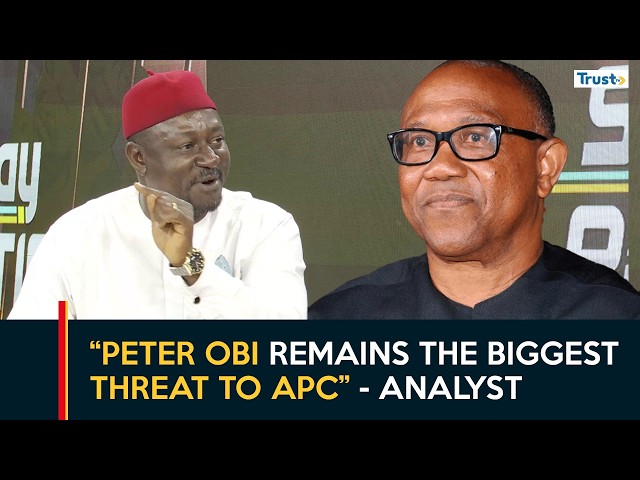
The APC’s public dismissal of Obi as an electoral lightweight does not withstand scrutiny of the 2023 results. Obi carried eleven states outright, finished first in Lagos and the Federal Capital Territory, and mobilised millions across ethnic and regional lines. He achieved this despite running on a Labour Party that had no governors, no legislative muscle, and no history of national competitiveness.
What happens when that same candidate runs on a platform with actual organisational structure, or, more frighteningly for the APC, in coalition with a Northern political machine like Kwankwaso’s?
Professor Usman Yusuf of the APC-aligned camp insists that “Obi, Kwankwaso coalition won’t shake Tinubu in 2027”. But the very fact that such high-level dismissals are being issued eighteen months before the election suggests a level of concern that contradicts the dismissive rhetoric. If the coalition truly posed no threat, why talk about it at all?
3. The Zoning Dilemma
President Tinubu benefits from a powerful but fragile consensus: the understanding that power should remain in the South for a second term. This sentiment works in his favour against Northern aspirants but creates a vulnerability Obi can exploit.
Obi represents the same Southern presidency principle but with an additional layer of regional symbolism. In the South-East and parts of the South-South, his candidacy is viewed not merely as political competition but as a long-overdue act of regional inclusion. For a country still nursing wounds from the civil war and grappling with questions of marginalisation, this is not a trivial electoral factor.
The APC’s best hope is that the opposition remains fragmented across multiple platforms, NDC, Labour Party, PDP, ADC, creating vote-splitting that benefits the incumbent. This explains the ruling party’s alleged strategy of fomenting crises within every opposition party Obi touches. A united opposition is the nightmare; institutional chaos is the weapon.
4. The Economic Frustration Factor
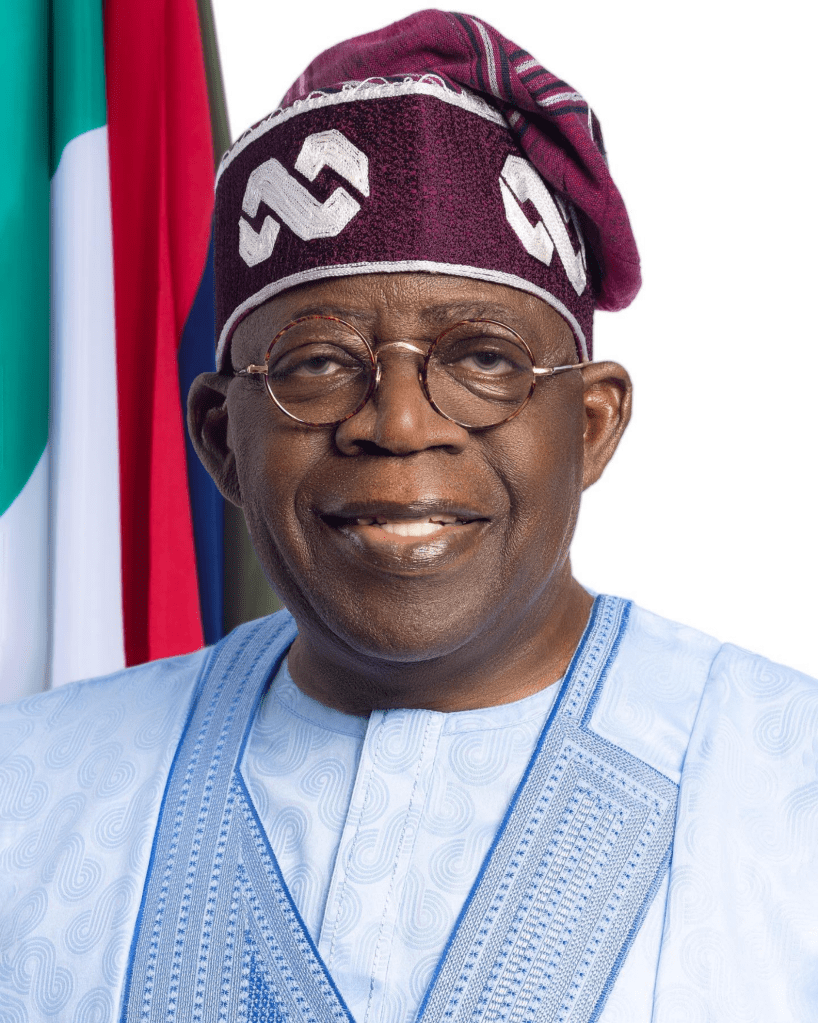
President Tinubu’s economic reforms have produced measurable macroeconomic improvements, inflation down from 34% in 2024 to 18.3% in April 2026. But as any political strategist will acknowledge, voters vote with their pockets, not with statistics.
“A bag of rice still costs more than a civil servant’s monthly salary, and ‘renewed hope’ has become a cruel joke to the mother hawking tomatoes… at 9pm because there’s no light at home”. This is the reality on the ground, and it creates fertile ground for an opposition candidate who campaigned on frugality, competence, and a break from the political establishment.
The APC can point to macroeconomic indicators. Obi can point to the lived experience of millions of struggling Nigerians. In a democracy, the latter often carries more electoral weight.
THE APC’S STRATEGY: Containment by Any Means Necessary
Faced with a threat they cannot defeat through popularity contests, the APC appears to have adopted a strategy of institutional containment.
The playbook is now discernible:
1. Infiltrate and destabilise any political platform Obi associates with.
2. Deploy judicial instruments to create leadership crises that delegitimise opposition parties.
3. Leverage INEC to reinterpret court rulings in ways that disadvantage opposition formations.
4. Maintain public dismissal while working quietly to ensure the most threatening candidate never appears on the ballot.
This is not the behaviour of a party confident in its electoral prospects. It is the behaviour of a party that recognises, even if it will not admit, that Peter Obi possesses something its candidate cannot match: the genuine, spontaneous, and digitally-organised love of millions of Nigerians who have lost faith in the old political order.
THE WEAKNESS IN THE ARMOUR
To be analytically honest, the NDC’s current position contains vulnerabilities that the APC is counting on.
The party has won zero elections. No governors. No legislative seats. No by-election victories. Yilwatda’s dismissal, “performance is not on TV, it is not on radio; it is on the field during elections”, is politically motivated but factually accurate.
The Labour Party’s 2023 experience offers a cautionary tale: a compelling candidate can win hearts but lose elections if the party infrastructure is too weak to protect votes at the polling unit level. Ward-level agents, result-sheet monitoring, and legal response capacity are the unglamorous determinants of Nigerian elections, and they require time and resources the NDC has not yet had the opportunity to accumulate.
Furthermore, the opposition remains fragmented. The NDC, ADC, Labour Party, and PDP represent competing rather than complementary opposition forces. In a first-past-the-post system, this fragmentation is the incumbent’s greatest ally.
CONCLUSION: The Fear is Real
The APC is not scared of Peter Obi because he has more money, more governors, or more traditional political structure. They are scared because he represents something their political machinery cannot manufacture: credible, authentic opposition that mobilises citizens rather than patronising them.
The alleged plots to deny him a platform, through Labour Party crises, ADC delisting, and NDC registration battles, suggest a ruling party that understands the electoral mathematics perfectly. If Obi is on the ballot with a viable Northern coalition partner and a functioning party structure, the 2027 election becomes unpredictable. If he is kept off the ballot through institutional manipulation, the APC secures a second term without breaking a sweat.
The question for Nigerians, and for the international community that claims to care about democracy, is whether they will allow the instruments of electoral management to be weaponized against the very principle of competitive elections.
As the Obidient Movement warned, any attempt to exclude opposition figures from the electoral process will “undermine public confidence in Nigeria’s democracy”. The APC may win the battle of institutional manipulation. But the war for Nigeria’s democratic soul will have lasting consequences far beyond 2027.


Leave a comment