By The Searchlight Editorial Team / May 17, 2026
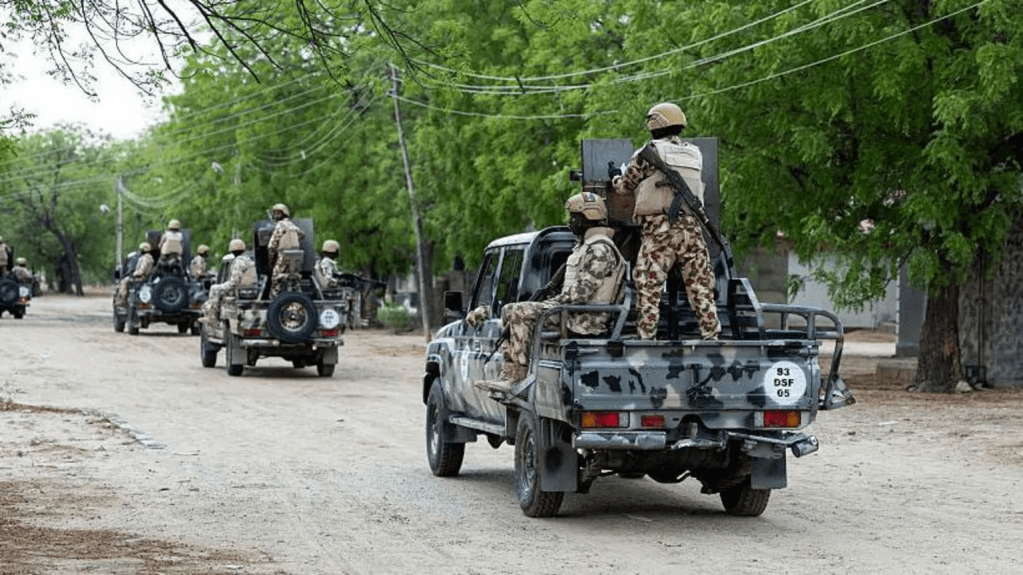
The announcement that Abu-Bilal al-Minuki, described as the Deputy Commander of ISIS globally, has been eliminated in a joint Nigeria-U.S. operation initially appeared as a significant victory in the long-running counter-terrorism war. However, beneath the triumphant headlines lies a complex web of contradictions, operational ambiguities, and geopolitical undercurrents that demand critical scrutiny.
The Searchlight dissects the claims, the denials, and the broader questions raised by this high-profile killing.
The Claim vs. The Clarification: Who Pulled the Trigger?
The narrative began with two parallel announcements. U.S. President Donald Trump took to Truth Social to hail a “meticulously planned and very complex mission” executed by “brave American forces and the Armed Forces of Nigeria”. Shortly after, President Bola Tinubu echoed the sentiment, celebrating a “daring joint operation”.
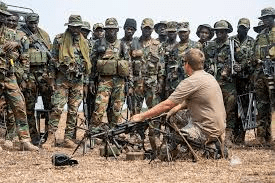
However, a significant divergence emerged from the Nigerian armed forces almost immediately. While acknowledging cooperation with the U.S. Africa Command (AFRICOM), military sources were categorical in stating that American soldiers were not involved in the actual battle. According to the military, the engagement was a “carefully coordinated precision air-land assault” conducted by Nigerian troops, with the U.S. role confined to intelligence, surveillance, and reconnaissance (ISR), essentially, providing the coordinates and watching from above.
This distinction is not merely semantic. It speaks to the sensitive issue of sovereignty. The official Nigerian position seems designed to project military competence domestically, avoiding the optics of foreign boots on Nigerian soil. Conversely, the U.S. framing emphasizes direct kinetic action, a messaging strategy likely aimed at showcasing President Trump’s “America First” policy delivering decisive results abroad.
The most plausible synthesis is that this was a U.S.-directed strike leveraging Nigerian assets. The U.S. likely provided the targeting intelligence, possibly signals intelligence and phone intercepts, while Nigerian special forces conducted the ground assault. This hybrid model respects Nigerian “boots on the ground” sovereignty while acknowledging that the kill chain was likely enabled by U.S. technology and coordination.
The Intelligence Question: Why Now?
A troubling question persists: If al-Minuki was such a high-value target, responsible for global operations, hostage-taking, and drone development , why was the Nigerian military, with years of experience in the Lake Chad Basin, unable to eliminate him until now?
The official explanation points to a recent surge in U.S.-Nigeria security cooperation. In early May 2026, National Security Adviser Nuhu Ribadu held high-level meetings in Washington with U.S. Vice President J.D. Vance and Secretary of State Marco Rubio. These talks reportedly solidified the Nigeria-U.S. Joint Working Group framework, focusing on “intelligence sharing, defence cooperation, and counterterrorism support”.
Analysts suggest that the al-Minuki operation was the first major dividend of those meetings. The intelligence that led to his location allegedly involved months of “communications monitoring and phone intercepts” dating back to December 2025, a level of electronic surveillance that the Nigerian security apparatus may lack the technical capacity to conduct alone.
This suggests a capability gap. While Nigerian forces are proficient in conventional counter-insurgency, targeting a “global ISIS commander” required signals intelligence and geolocation capabilities that remain the preserve of U.S. AFRICOM. The implication is uncomfortable: Nigeria may be outsourcing the “find” function of “find, fix, finish” to a foreign power.
The Ghost of 2024: Was He Killed Before?
The most damaging line of skepticism concerns the claim that al-Minuki was previously killed by Nigerian forces in 2024. Multiple reports indicate that a terrorist commander bearing the same name appeared on a list of ISWAP operatives reportedly eliminated during operations around the Birnin Gwari forest axis in Kaduna State.
The Presidency, through Special Adviser Bayo Onanuga, has dismissed this as “a case of mistaken identity”. Officials argue that the 2024 assessment was an error, the product of “the fog of sustained counterinsurgency operations,” and that al-Minuki’s “operational sphere” was never actually in Birnin Gwari. They insist that this time, “there is no ambiguity” and that authorities are “100 per cent certain” of the target’s identity.
The public has reason to be skeptical. Nigerians vividly recall past incidents where terrorist leaders,, most famously Boko Haram’s Abubakar Shekau, were prematurely declared dead only to resurface. The military’s history of overclaiming victories has eroded public trust. When an institution declares a high-value target killed twice, it raises a fundamental question: Was the 2024 operation botched, or is the 2026 claim inflated?
The Searchlight views the Presidency’s “mistaken identity” defence as plausible but not entirely reassuring. In the chaos of asymmetric warfare, misidentifications happen. However, the burden of proof now rests on the military to release verifiable evidence, beyond name-checking, that the man killed in Metele is indeed the global commander, not another local faction leader bearing a similar nom de guerre.
The Ribadu Factor: Diplomatic Breakthrough or Coincidence?
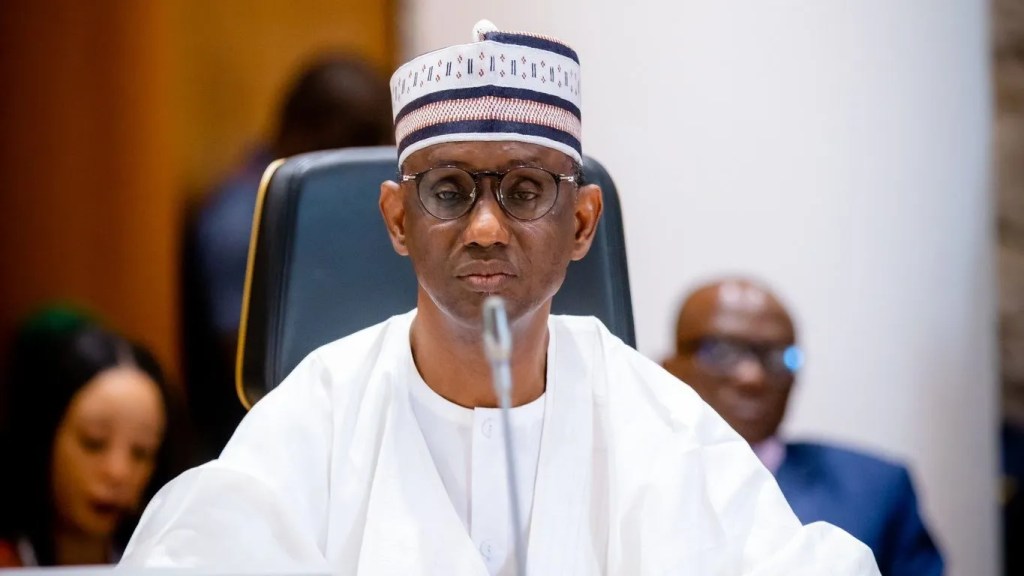
Was the timing of the operation a direct fallout of Nuhu Ribadu’s recent Washington visit? The timeline is suggestive: Ribadu met with Vance and Rubio between May 4 and May 6, 2026. The al-Minuki raid occurred just ten days later, on May 15.
While the intelligence gathering reportedly began months earlier, the authorization to execute likely required political buy-in at the highest levels. Ribadu’s visit served to finalize the “rules of engagement” for U.S. forces operating in coordination with Nigeria. Without that diplomatic framework, the strike might have remained in the planning phase indefinitely.
Security experts quoted in local media have noted that “the speed and precision of the operation… strongly reflect the effectiveness of those renewed coordination channels”. It is plausible that Ribadu returned from Washington with a green light, and perhaps actionable real-time intelligence, that enabled the mission.
Thus, while the operation was not merely a “fallout” of the visit, the visit was almost certainly the final bureaucratic hurdle cleared before the trigger was pulled.
Ahmad Gumi’s Calculus: Why Turkey, Not America?
In the aftermath of the strike, controversial Islamic scholar Ahmad Gumi has renewed his call for the Federal Government to halt military cooperation with the United States, describing U.S. involvement as a “neo-Crusade war against Islam”.
Gumi’s preference for Turkey, China, or Pakistan over the U.S. is rooted in a specific worldview. He argues that the U.S. carries “geopolitical baggage”, namely, a history of invading Muslim lands (Iraq, Afghanistan) and what he perceives as a bias toward protecting Christian minorities. He claims the U.S. intervention in Nigeria is a pretext to “protect Christians” and will ultimately “polarise the nation”. That is the view of a man who has been in cahoot with terrorists and bandits killing, destroying and polarising Nigeria.
By contrast, Gumi views Turkey, a Muslim-majority nation with NATO membership, as a “neutral” power that can provide military assistance without the ideological baggage of a “Crusader” narrative. Pakistan and China, in his view, are less likely to impose cultural or religious conditions on their security cooperation. His claim that “Turkey, a Muslim-majority nation….” would be neutral, speaks volumes of his biased opinion.
The Searchlight notes that Gumi’s analysis, while provocative, overlooks practical realities. Turkey has its own geopolitical ambitions in Africa and has conducted successful drone strikes against terrorists in Iraq and Syria. However, it lacks the real-time signals intelligence infrastructure that AFRICOM possesses. For Gumi, the calculus is not about capability, it is about symbolism and preventing the perception of a Western Christian alliance killing Muslims, even terrorists. His hostility to the U.S. is less about policy and more about the narrative of Islamic sovereignty.
Conclusion: Victory or Public Relations?
The elimination of Abu-Bilal al-Minuki is, on balance, a tactical success. Removing a senior commander disrupts ISIS’s global operations. However, the controversies surrounding the operation reveal deeper systemic issues:
1. Credibility Gap: The “mistaken identity” excuse regarding the 2024 report damages military credibility. The public needs transparency, not reassurances of “100 per cent certainty.”
2. Dependency Dilemma: While intelligence sharing is welcome, Nigeria’s inability to locate a high-value target without U.S. signals intelligence is a strategic vulnerability. Is Nigeria building capacity or merely borrowing it?
3. Sovereignty vs. Security: The conflicting narratives about U.S. involvement suggest a government uncomfortable admitting the extent of foreign military integration into its operations. The public deserves a single, truthful account of what happened.
The Searchlight urges the National Security Adviser’s office to provide verifiable evidence of al-Minuki’s identity and death, beyond official statements. In the fight against terrorism, facts are the ultimate weapon against skepticism.


Leave a comment