By The Searchlight Chief Correspondent / May 14. 2026
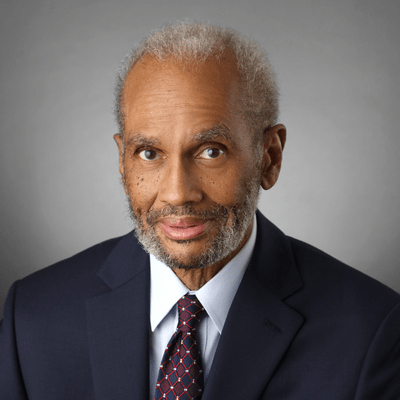
In the annals of political science, few concepts have captured the tragic essence of a nation as accurately as Richard Joseph’s theory of Prebendalism. Originally articulated in his seminal 1987 work, Democracy and Prebendal Politics in Nigeria, the term describes a system where state offices are not mechanisms for public service but “prebends”, fiefdoms to be exploited for the personal enrichment of the officeholder and their narrow circle of cronies, family, and ethnic kinsmen.
Over three decades later, Nigeria has not reformed this system; it has perfected it. What we are witnessing today is no longer a corruption of democracy but the full maturation of a prebendal oligarchy. The political class has abandoned any pretence of governance for the public good, replacing it with a naked, transactional scramble for state resources. The Searchlight in this article, exposes the mechanics of that system, its devastating consequences, and why Nigeria risks becoming a failed state if this operating system is not dismantled.
Defining the Monster: Beyond Simple Corruption
To understand Nigeria’s paralysis, one must distinguish between garden-variety corruption and Prebendalism. Corruption is generally the misuse of office for private gain; Prebendalism is the reason the office exists in the first place.
As defined by Joseph, Prebendalism centralizes the struggle to control and exploit the offices of the state. In a healthy economy, wealth is produced in the private sector. In a prebendal state like Nigeria, wealth is simply allocated by the state. Consequently, politics becomes a high-stakes armed robbery, not a contest of ideas.
Contemporary analysts have expanded on this, noting that prebendalism transforms the state into a rentier entity. Because Nigeria derives the bulk of its revenue from oil (rent) rather than productive taxation, the political class forms a “cult-like” agreement to share the national booty. The result is a political system described as a “formalized and institutionalized underworld,” where loyalty to the “Godfather” is the only currency that matters.
The Mechanics of the Machine
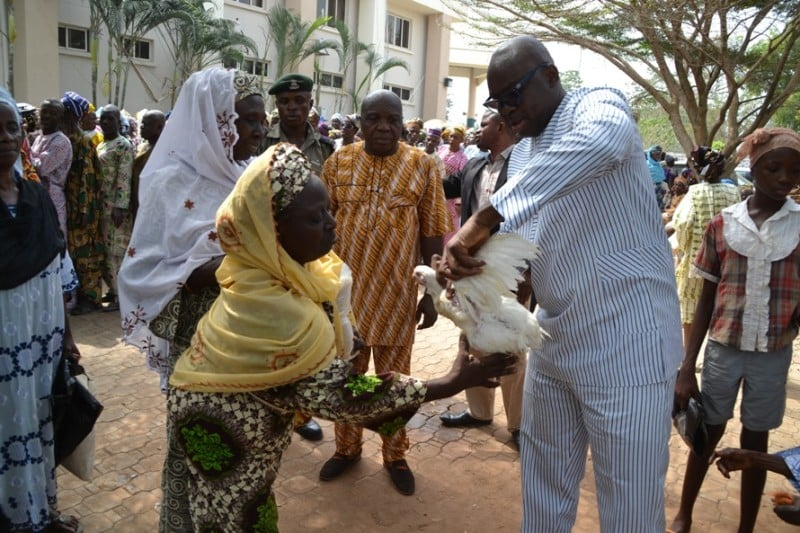
The prebendal system operates through a specific, predictable cycle that has become the bedrock of the Nigerian “democracy”:
1. Sponsorship by the “Godfather”: Wealthy political entrepreneurs (often termed Godfathers) who lack legitimate popular appeal use their financial muscle to sponsor “cronies and charlatans.”
2. Elected Acolytes: These proxies are installed through rigged primaries and general elections, acting as placeholders for their sponsors.
3. Recouping Investment: Once installed, the politician must recoup the “cost” of the election by looting the treasury, awarding inflated contracts to cronies, and siphoning salaries for ghost workers.
4. Financing the Next Cycle: A portion of the loot is returned to the Godfather to finance the next electoral heist.
The Naked Practice: The Tinubu Template
In the current dispensation, critics argue that the administration of President Bola Ahmed Tinubu has taken prebendalism from a quiet vice to a brazen state ideology. Analysts note that the government operates on a “game-theoretic, self-interested” logic, viewing politics as a game devoid of morality rather than a social contract.
The Spoils System as Governance
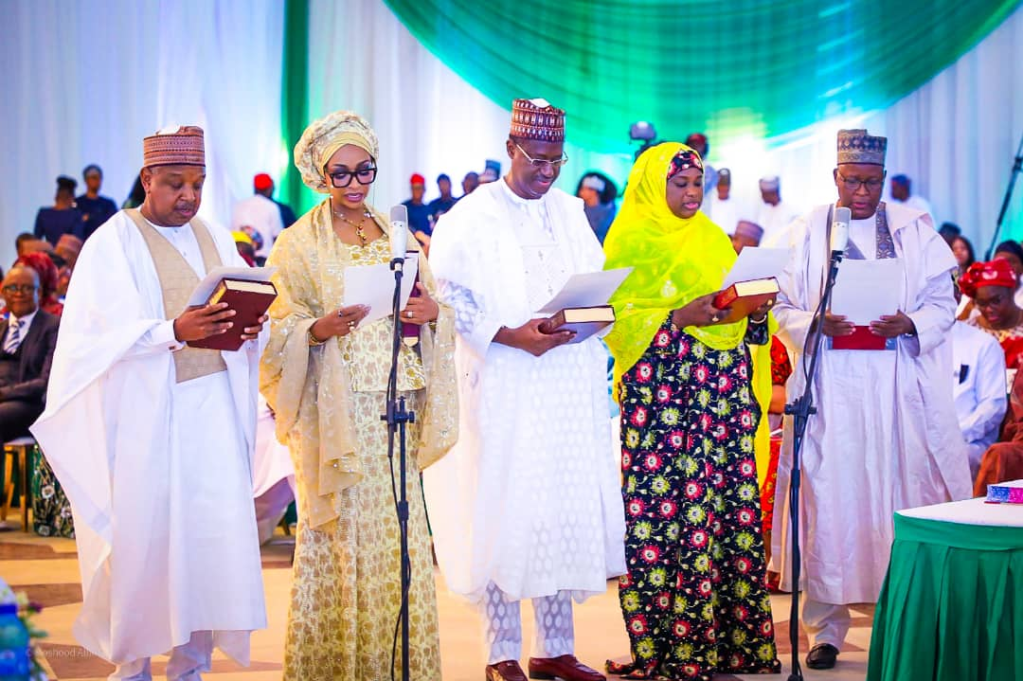
The appointment of public officials has become the most visible symptom of this decay. It is estimated that over 95% of top appointees are selected based on personal fealty, ethnic affinity, or party loyalty rather than competence. Diplomacy, the art of representing a nation’s interests abroad, has been reduced to a reward system for political mercenaries.
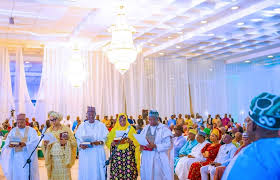
Critics point to embarrassing appointments of individuals with questionable pedigree and documented histories of vitriolic partisan attacks to foreign embassies, arguing that the president “does not care about the reputational risks those appointments pose to Nigeria” because he views diplomatic posts merely as “rewards for personal fealty”. When a nation sends political thugs as ambassadors, it broadcasts to the world that it has no national honour; only tribal and personal interest.
The Defection “Mafia”
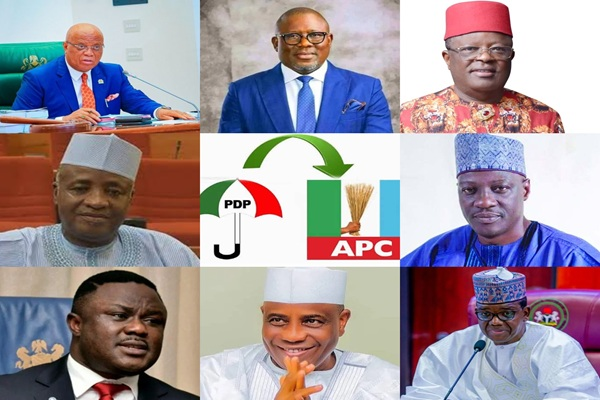
The fragility of Nigeria’s party system illustrates the depth of the prebendal mindset. Ideology is dead. Recently, opposition governors have been “lured” into the ruling party not by policy alignment but by the promise of immunity from prosecution and access to federal largesse. This transactional politics ensures that there is no opposition, only a revolving door of office seekers desperate for their turn at the trough.
The Challenges: Why Prebendalism is Invincible (For Now)
If prebendalism is so destructive, why does it persist? The challenges to eradicating it are deeply embedded in the societal psyche and institutional framework.
– The Absence of a National Conscience: In functioning states, institutions like the judiciary, religious bodies, and civil society act as “pillars of integrity.” In Nigeria, these pillars have largely collapsed. Critics lament that religious leaders and traditional rulers who should “speak truth to power” instead flock to the presidential villa to “proclaim from the rooftops” that the emperor has clothes, ignoring “the abject absence of security, stability and social harmony”. The moral guardrails have been removed.
– The “Price Point” of Every Nigerian: The culture has become so deeply transactional that virtually every citizen is assumed to have a price. The logic of “if you can’t beat them, join them” governs everything, from village meetings to parliamentary votes. This acceptance normalizes the abnormal.
– Ethnic and Religious Diversion: The political elite actively weaponizes ethnic and religious identity to maintain the prebendal system. By keeping the populace fighting over whether a “Yoruba Muslim” or “Hausa Christian” gets a contract, they divert attention from the fact that the system itself is stealing from the entire populace. As noted in academic critiques, prebendalism thrives on the deepening of “ethnic, linguistic and regional identities” to obscure class exploitation.
The Consequences: The Development Abyss
The consequences of this prebendal capitalism are not abstract; they are measured in dead babies, crumbling roads, and fleeing capital. While the political class flies private jets, the masses face “deepening poverty and inequality”.
Economic Stagnation and the “Extractive State“: Nigeria has become the archetype of an extractive state. Wealth is concentrated among a tiny clique of politically connected billionaires who use state power to crush competition. Instead of fostering an “enterprise society” where individuals leverage skills to create value, Nigeria incentivizes “connection” to the state. Prof. Joseph noted the stark disparity between Asia and Sub-Saharan Africa: while Asia invested in human capital and infrastructure, Nigeria remains trapped in the “vicious cycle of prebendal politics”.
Rural Poverty and Infrastructure Collapse: Academic research provides empirical data on the damage. A quantitative study on Prebendalism and Rural Poverty found that the practice is a primary driver of “low income, poor shelter, poor health facilities” in rural areas. Because funds allocated for development are diverted via prebendal networks (contracts awarded to ghost companies owned by cronies), the physical condition of the grassroots remains a “mirage”.
Democracy Regressing: Nigeria is sliding toward what analysts call an electoral autocracy. The prebendal president, viewing himself as a “game master,” has “perfected the prebendal practice of doling out public offices” to ensure that the ruling party controls every lever of power, effectively killing the multi-party system. When the opposition is co-opted into the ruling party’s feeding bottle, the essence of democracy, which is accountability, dies. It is already obvious. The situation was different when the NPN co-opted GNPP’s Waziri Ibrahim during the second republic.
Conclusion: A Future Foretold
Richard Joseph warned that Nigeria was “building a republic on crumbling stones”. In 2026, that republic is in ruins. The prebendal system has consumed the state. As long as the political calculation remains “what can I steal today?” rather than “what can I build for tomorrow?” the country will continue to sink.
The way out, as scholars suggest, requires a radical re-imagination of the political economy. It requires moving from a prebendal state to an enterprise state, where wealth is produced, not shared. It requires empowering the youth to reject the “godfather” mentality. However, as long as the “Godfathers” control the electoral process, the judiciary, and the security apparatus, the Nigerian project looks terminally ill.
The Searchlight has revealed the rot. The question is whether Nigerians are willing to fumigate the house or will continue to live with the stench.


Leave a comment