By Matthews Otalike, The Searchlight Correspondent / May 13, 2026
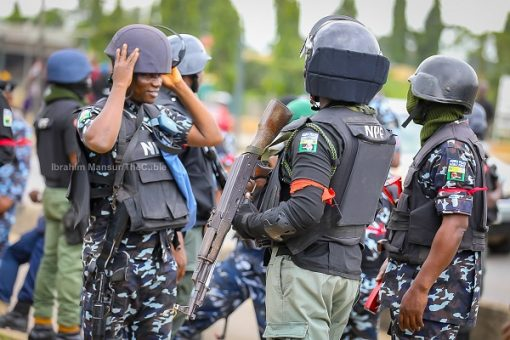
In the five years since young Nigerians stood their ground at the Lekki Toll Gate, a fundamental question has continued to trouble democratic advocates: why do most Nigerians, faced with unmistakable evidence of state violence and administrative incompetence, choose the path of resignation over resistance? Why do the same people who readily admit that “things are getting worse, much, much worse” continue to wring their hands in private while refusing to challenge the architects of their misery?
These are uncomfortable questions. But The Searchlight has never shied away from uncomfortable truths. The evidence before us suggests that the pedestrian reasoning and political passivity that characterize large segments of the Nigerian populace are not accidental. They are the direct, intended consequences of decades of state-engineered trauma, legal strangulation of civic spaces, and a calculated strategy of attrition that has taught citizens that dissent carries costs their fragile existences cannot absorb.
THE ARCHITECTURE OF SILENCE: HOW THE STATE BROKE THE CITIZEN’S WILL
To understand Nigerian passivity, one must first understand Nigerian pain. The civic space in Nigeria is currently rated as “Repressed” by CIVICUS Monitor, placing the country alongside nations where protests are routinely restricted and media freedom systematically curtailed. This is not a spontaneous condition but a carefully constructed reality.
The historical arc tells a damning story. From colonial repression through decades of military authoritarianism to the present democratic dispensation, the Nigerian state has consistently treated dissent as a threat to be neutralized rather than a voice to be heard. The return to civilian rule in 1999 did not erase this logic, it merely re-branded it. The 2000s brought new legislative instruments: the Cybercrime Act, the NGO Regulation Bill, and amendments to the Companies and Allied Matters Act (CAMA). Each was sold to the public as a tool for national security or financial transparency. In practice, they became precision instruments for surveillance, restriction, and silencing.
The numbers tell a chilling story. According to Reporters Without Borders, Nigeria dropped 10 spots to 122nd in the 2025 World Press Freedom Index. The Centre for Journalism Innovation and Development documented 110 verified attacks on the press in 2024 alone, surpassing the entire previous year’s total. Between March and May 2024, five journalists were prosecuted under the Cybercrime Act following its amendment, with dozens more harassed or detained. The message being transmitted to every Nigerian citizen is unambiguous: speak, and you will pay.
THE LEKKI MASSACRE: A GOVERNMENT OF LIES
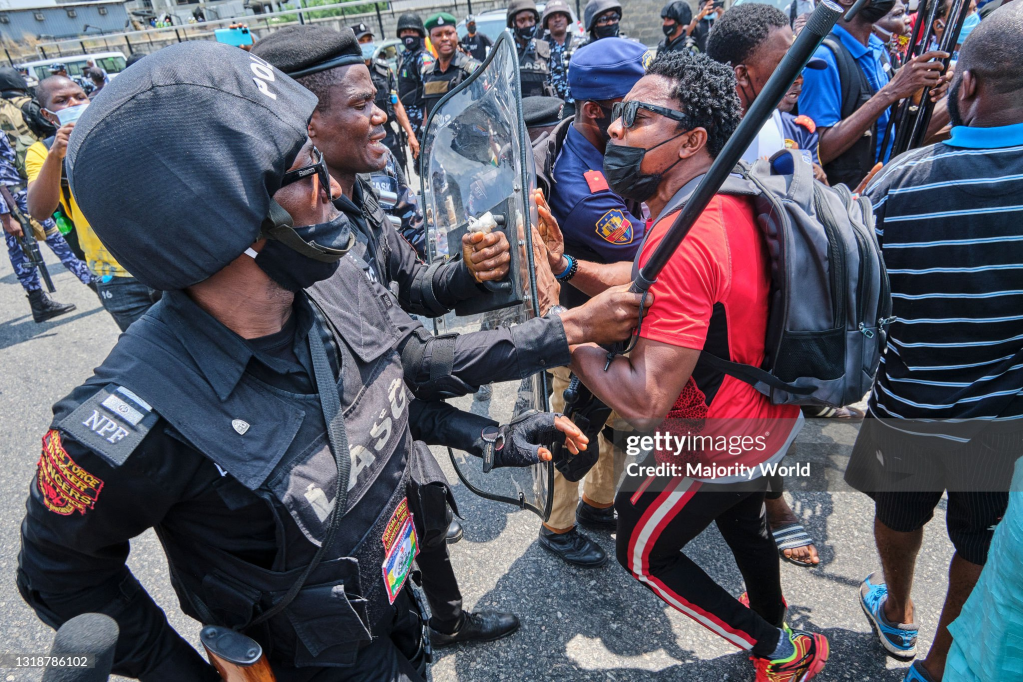
No single event better illustrates the state’s contempt for citizen life, and its willingness to manufacture reality, than the October 20, 2020, shooting of peaceful #EndSARS protesters at the Lekki Toll Gate.
For months, the Nigerian government engaged in an elaborate performance of denial. The former Chief of Army Staff, Lt. Gen. Tukur Buratai, famously declared that “there was no single corpse” at Lekki, suggesting that those who reported deaths were “seeing double”. The Lagos State Government, in a 41-page White Paper, insisted that only one person died of a gunshot wound at the toll gate. They dismissed witness testimony, rejected documented evidence, and characterized the findings of the Judicial Panel of Inquiry as “totally unreliable”.
But the truth has a way of surviving official obfuscation. The Judicial Panel’s report, subsequently made public despite government resistance, found that **no fewer than eleven protesters were confirmed killed at the Lekki Toll Gate, with four others “missing presumed dead”. Amnesty International separately documented that at least 56 protesters were killed across Nigeria during the #EndSARS protests of October 2020 alone.
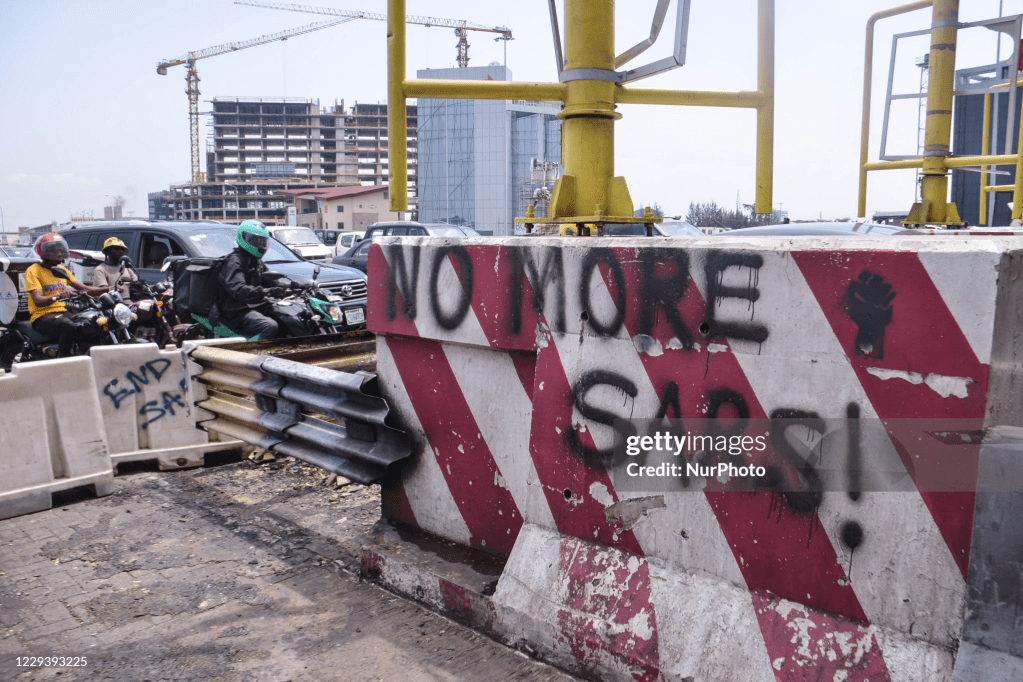
These are not abstract statistics. They are the sons and daughters of Nigerian families. They are the price paid for demanding that the Special Anti-Robbery Squad be disbanded after years of documented torture, extortion, and extrajudicial killings. And when families sought justice, the government responded not with accountability but with the full apparatus of denial.
What lesson does this teach the average Nigerian? That the state can kill with impunity. That official inquiries are mere theatre. That the truth, no matter how well documented, can be dismissed with the stroke of a pen.
THE LEGAL NOOSE: HOW LAWS BECOME WEAPONS
The suppression of dissent in contemporary Nigeria operates through a sophisticated legal architecture that makes criticism indistinguishable from crime. The amendment of the Cybercrime Act in 2024 intensified this chilling effect, with Section 24, covering “cyberstalking,”deployed against journalists, activists, and ordinary citizens who post criticisms online.
The cases are mounting. In September 2025, the Federal Government charged Sahara Reporters publisher Omoyele Sowore under the Cybercrime Act for allegedly refusing to delete social media posts critical of President Tinubu. The Department of State Services filed a Strategic Lawsuit Against Public Participation (SLAPP) against Professor Pat Utomi, accusing him of attempting to “illegally usurp” presidential powers by discussing a shadow government. Even SERAP itself, an organization dedicated to accountability, has faced SLAPP lawsuits from the DSS over allegations of an “unauthorized office invasion” .
The message could not be clearer: the instruments of the state will be deployed not only against protesters in the streets but against anyone who types a critical sentence.
This legal strangulation has produced what SERAP and the Nigeria Guild of Editors describe as a “chilling effect that inhibits the enjoyment of human rights and circulation of ideas and information”. When journalists calculate the risks of publication, when activists measure the cost of a Facebook post, when ordinary citizens weigh the price of a re tweet, the state has already won.


Leave a comment