By Matthews Otalike, The Searchlight Correspondent / May 13, 2026
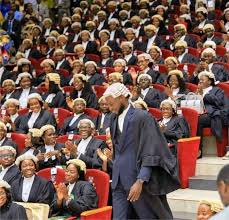
But legal repression alone does not explain Nigeria’s culture of passivity. The deeper explanation lies in the brutal economic calculus that shapes daily existence for the majority of citizens.
With 42 per cent of Nigerians living below the poverty line, dissent becomes a privilege afforded only to those who can afford its consequences . When a man wakes each morning uncertain whether he will feed his family, the luxury of political activism recedes into irrelevance. The African Polling Institute found that 84 per cent of Nigerians expressed “profound sadness” at the downturn in their quality of life during President Tinubu’s first year in office, with 74 per cent stating that their economic situation had “seriously worsened” compared to the previous two decades. This is not an environment conducive to revolution. It is an environment conducive to survival, narrow, desperate, and atomized.
The state understands this dynamic perfectly. When citizens are preoccupied with the rising cost of food, with school fees, with spiralling healthcare costs, they are not organizing, not mobilizing, not holding anyone accountable. Economic precarity functions as perhaps the most effective silencing mechanism ever devised, cheaper than bullets, more deniable than arrests, and entirely self-enforcing.
Beneath the legal and economic explanations lies a deeper, more insidious reality: the internalization of helplessness. Decades of coups, a brutal civil war, systematic crackdowns, and economic exclusion have taught Nigerians to “speak in code, protest in silence, and organize in shadows” .
Journalist Donu Kogbara, in a recent interview, put it more bluntly: “Nigerians under-react to outstanding atrocities”. She blames not just the rulers but the ruled, pointing to a “shortage of outrage” that enables bad governance to persist. “It’s our fault for not fighting back,” she insists. This is a hard truth that many would rather avoid. But The Searchlight has never been in the business of comfortable fictions.
The phenomenon that researchers call “constrained optimism” captures this Nigerian contradiction perfectly. Surveys show that 72 per cent of Nigerians believe the right to protest is “very important” for a functioning society. Yet when asked about political participation, 58 per cent report feeling no attachment to any political party. They believe in democracy but not in democrats. They value protest but will not protest. They want change but will not become agents of change.
This is not hypocrisy. It is the rational response of a population that has learned, through painful experience, that the costs of confrontation outweigh the likely benefits.
THE EXCEPTIONS THAT PROVE THE RULE
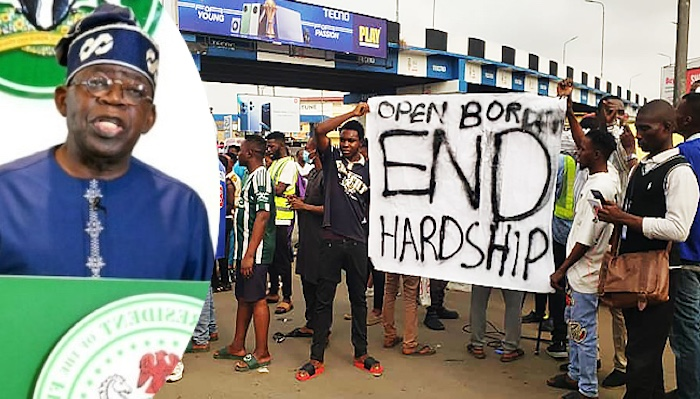
It would be inaccurate to suggest that Nigerians never resist. The #EndSARS movement itself was a remarkable eruption of citizen agency, spontaneous, digitally native, and temporarily effective. The #EndBadGovernance protests of August 2024 similarly drew thousands of young Nigerians into the streets despite the known risks.
But these moments are exceptional precisely because they are so rare. And even when they occur, they are met with the full force of state repression. During the August 2024 protests alone, at least 56 journalists were assaulted or arrested while covering demonstrations. The government’s response focused not on addressing the grievances, removal of fuel subsidy, escalating inflation, excruciating hunger, but on “vilifying and incarcerating the protesters”.
Each crackdown resets the calculus of risk. Each detention sends a message. Each bullet, whether fired at Lekki or elsewhere, echoes through the psyche of a nation, reminding citizens why silence is safer.
THE WAY FORWARD: RECLAIMING THE CIVIC SPACE
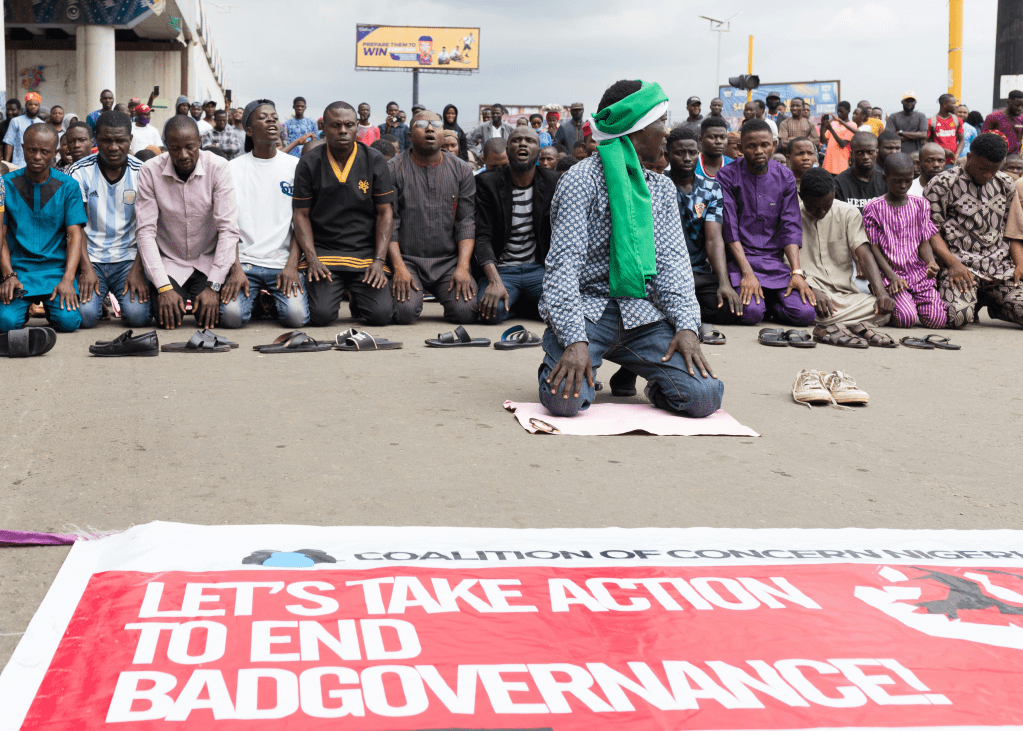
The Searchlight does not believe that Nigerians are irredeemably passive or congenitally incapable of holding power to account. We believe they have been systematically conditioned, through violence, legal repression, and economic strangulation, to accept what they cannot change. But conditioning can be reversed. Passivity can be unlearned.
The path forward requires, first, a recognition that civic space is not a luxury Nigeria can suspend until it “fixes” insecurity. As one analyst put it, civic space “is the condition of security itself”, the architecture that allows grievances to be expressed before they become explosions.
Second, it requires legal reform. The decriminalization of defamation, the repeal of repressive provisions in the Cyber crime Act, and an end to SLAPP lawsuits would signal that the state no longer intends to weaponize the judiciary against its critics.
Third, it requires economic policies that do not treat citizens as enemies to be pacified but as partners to be empowered. Hunger is not a foundation for democracy. Precarity is not a breeding ground for accountability.
Finally, it requires Nigerians themselves to rediscover what the #EndSARS protesters understood: that the state is only as powerful as citizens permit it to be. That silence is not safety but slow death. That the “shortage of outrage” can be remedied.
The Searchlight remains committed to holding government accountable, not because we believe it will be easy, but because the alternative is unthinkable. We call on every Nigerian to ask themselves the question that Kogbara posed: whose fault is it, really? At what point does the victim’s patience become complicity? And what are we willing to risk for a country that works?
The answers will determine not just the future of Nigerian democracy but whether that future arrives at all.


Leave a comment