By The Searchlight Correspondent / May 12, 2026

There was a time when powerful men in Nigeria went to bed afraid. Not of coup plotters or armed robbers, but of journalists. When Dele Giwa, Ray Ekpu, Dan Agbese, and Yakubu Mohammed founded Newswatch magazine in 1985, they did something that seems almost unimaginable today: they made the mighty tremble. They built a publication that did not merely report events but interrogated power, rigorously, fearlessly, and without compromise.
That era produced legends, among them John Chiaghmen on News Week, Tony Iredia on Pointblank, Matthews Otalike, etc, all of NTA exposed fraud in pension fund administration with the kind of dogged investigation that sent bureaucrats scattering. Another Otalike investigation removed a state Chief Judge from office, a sitting judicial officer brought down by broadcast journalism. On NTA’s Point Blank, politicians sweated profusely. Newswatch famously put military rulers on the cover with questions they could not answer. The National Concord, under Giwa’s editorial leadership, set standards that became the benchmark for Nigerian journalism .
What happened?
Today, The Searchlight asks a question that haunts every veteran journalist in this country: where have the watchmen gone? Why is investigative journalism, once the crown jewel of Nigerian media, now a rare and dangerous luxury? The answer is not simple, but it is damning. And it points to a deliberate, multi-pronged assault on the very idea that journalism should hold power accountable.
THE GOLDEN AGE: WHEN JOURNALISTS MADE POWER NERVOUS
To understand what has been lost, we must first remember what existed.

Newswatch was born at a time when military authoritarianism cast a long shadow over the press, and journalism was often an act of personal risk rather than professional routine. Yet against this backdrop, four men, Giwa, Ekpu, Agbese, and Mohammed, forged a newsroom culture anchored on rigorous investigation, intellectual depth, ethical restraint, and fearless independence .
They were not just editors; they were warriors. Dele Giva brought cosmopolitan flair and an unshakeable belief that journalism must speak truth even when truth bleeds. Ray Ekpu embodied steely courage and editorial discipline, a sentinel who understood that the press must never surrender its moral authority. Dan Agbese contributed reflective depth and philosophical clarity, seeing journalism as a public trust. Yakubu Mohammed exemplified professional rigour and institutional loyalty.
Their bond was intellectual and emotional. They disagreed fiercely, debated endlessly, but closed ranks when the ideals of the profession were threatened. In an industry often fractured by ego, patronage, and compromise, they demonstrated that solidarity could coexist with independence, and that friendship need not dilute professional integrity.
The measure of journalistic glory in that era was not popularity or proximity to power, but courage: the readiness to go in and out of detention, to endure proscription, harassment, and intimidation in defence of the public interest. They understood that the press does not exist to entertain power, but to hold it accountable; not to amplify rumours, but to verify truth.
That tradition stands in sharp contrast to what is often obtainable today.
THE FIRST BULLET: THE ASSASSINATION OF DELE GIWA
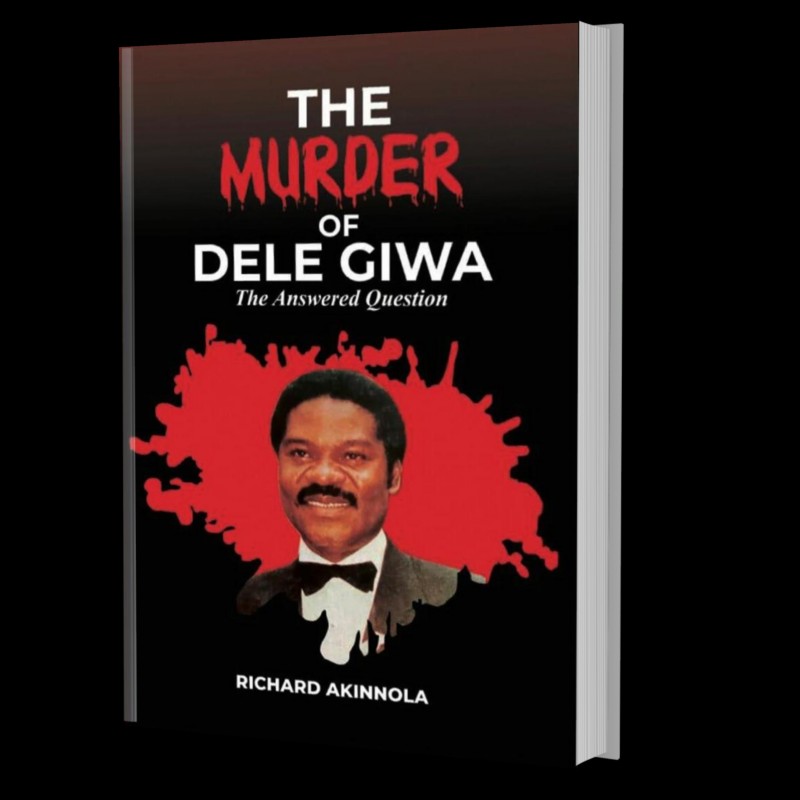
The beginning of the end can be traced to a single, horrific act. On October 19, 1986, a parcel bomb was delivered to Dele Giwa’s home in Lagos. It exploded in his hands. He died instantly.
Giwa’s assassination marked a violent rupture, a chilling message to the press that no one was untouchable. The message was received loud and clear: investigate power, and you may pay with your life. That Newswatch endured after Giwa’s murder, sustained by Ekpu, Agbese, and Mohammed, who refused to let terror silence inquiry, was itself an act of resistance. But the damage was done. A line had been crossed, and the state had demonstrated that there were no limits to what it would do to silence inconvenient truths.
THE LEGAL STRANGULATION: HOW THE CYBER-CRIME ACT BECAME A WEAPON
If Giwa’s assassination was the first bullet, the Cyber-crimes (Prohibition, Prevention, etc) Act of 2015 has been a sustained bombardment. Initially designed to combat cyber threats, this law has become the primary tool for silencing dissent and stifling investigative journalism in Nigeria.
The Act’s Section 24—which criminalized sending messages that are “knowingly false,” “grossly offensive,” or merely an “annoyance”, has been particularly ripe for abuse. Although the section was amended in February 2024 to remove some of its most egregious elements, the new language still makes it illegal, punishable by up to three years in jail, to “knowingly or intentionally” communicate online anything that is “false, for the purpose of causing a breakdown of law and order [or] posing a threat to life”.
“This vague text is still used to unfairly prosecute journalists, particularly those who regularly publish investigative reports implicating political or institutional forces,” Sadibou Marong, the sub-Saharan Africa bureau director of Reporters Without Borders, told the Columbia Journalism Review. “Authorities are intent on gagging investigative journalism uncovering corruption and governance issues in the country.”
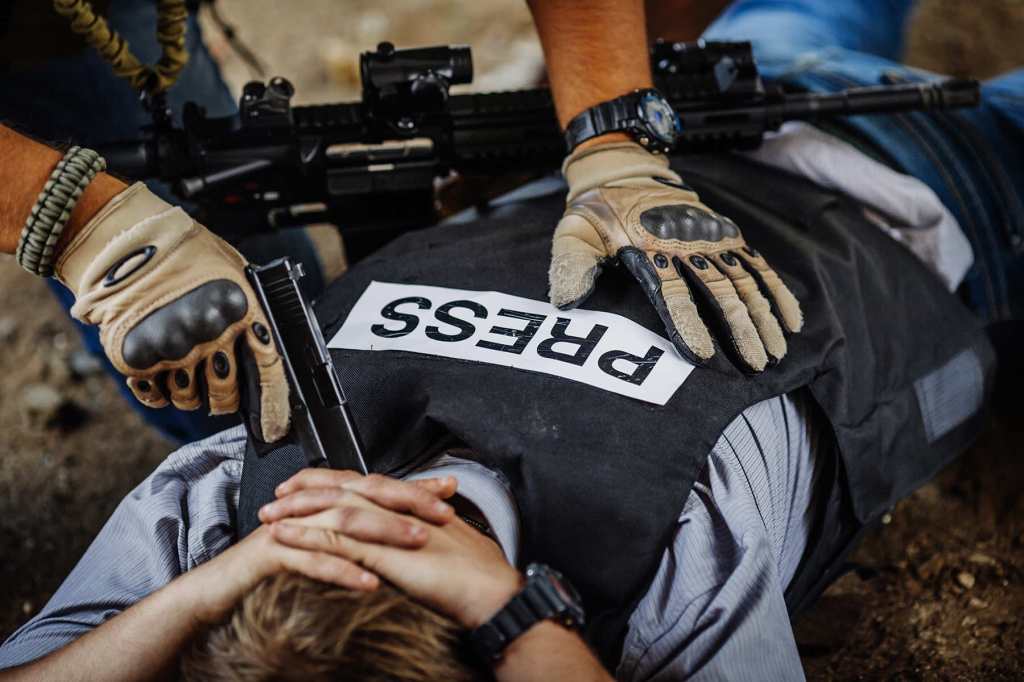
The numbers bear this out. Since the enactment of the Cyber-crime Act, at least 25 journalists have faced prosecution under its provisions. The Committee to Protect Journalists has documented more than two dozen cases. And these are only the cases that become public.
Consider the case of Daniel Ojukwu, a 26-year-old reporter for the Foundation for Investigative Journalism. In May 2024, he was “grabbed off the streets of Lagos by armed police and bundled into a vehicle”. For several days, he was held incommunicado, first in Lagos, then in Abuja, without being told what he had done wrong. His crime was publishing an article alleging that a former senior special assistant to the president on sustainable development goals had misappropriated over $106,000 of government funds intended for school construction. He was released without charge only after widespread public outcry.
Ojukwu’s experience is not exceptional. In March 2024, armed soldiers stormed the residence of Segun Olatunji, editor of FirstNews, and took him from Lagos to Abuja, where he was tortured and questioned for two weeks about criticisms of government officials in his publications. The military initially denied the abduction, only confirming it after public pressure mounted.
Salihu Ayatullahi, editor-in-chief of The Informant247, was arrested and detained with three colleagues after publishing an investigative series alleging corruption at a state-run polytechnic institute. “The experience was profoundly disturbing,” he recalled. “We were locked in a dark, cramped cell with hardened criminals. The psychological impact was heavier than the physical discomfort: I couldn’t sleep, not because of the poor conditions, but because I couldn’t stop thinking about how broken our system had become and how the corrupt could illegally summon the police to punish those who expose them”.
The case was dismissed eleven months later, without any evidence presented against the reporters. But the message had been sent: investigate, and you will pay, even if the charges never stick.
SLAPPS AND FINANCIAL ATTRITION: THE COST OF ACCOUNTABILITY

Legal prosecution is not the only weapon. Strategic Lawsuits Against Public Participation (SLAPPs) have become a favoured tool of the powerful to bankrupt and intimidate media houses.
The International Centre for Investigative Reporting (ICIR), one of the few remaining organizations committed to accountability journalism in Nigeria, has faced at least seven SLAPP lawsuits in just two years . “It’s not because our reports are false; we’re rigorous in our investigations,” says Dayo Aiyetan, ICIR’s Executive Director. “But people use lawsuits to punish us. It’s vendetta. It’s intimidation. They want to waste our time, drain our resources”.
The financial toll is staggering. “Just two suits, from the same person, one filed in Abuja, one in Lagos, have cost us over N5 million,” Aiyetan reveals. Without support from international organizations like Media Defence, ICIR would not survive. Each lawsuit is a calculated strategy of attrition, designed not to win in court, but to make investigative journalism economically unsustainable.
PHYSICAL INTIMIDATION: BLOOD AND BRUISES IN THE FIELD
Legal and financial warfare is supplemented by physical violence. In December 2023, ICIR’s News Editor, Marcus Fatunmole, went to Eagle Square in Abuja on a routine fact-checking assignment, taking pictures to verify claims about government buses. He was detained for six hours by private security guards and police, verbally harassed, and threatened.
In April 2023, ICIR journalist Sinafi Omanga was beaten while discreetly trying to document a case of jungle justice. A man in military uniform and a woman claiming to be soldiers led the mob action. His eyeglasses were broken, his N5,000 was stolen, and he was forced to pay N4,000 to his attackers.
The psychological impact has been profound. “I became scared of doing my job, especially when it involves the use of a camera,” Omanga admits. “To this day, I still worry about my safety when on the field, especially with a camera. Suddenly, journalism feels so risky to me” .
Mustapha Usman, another ICIR journalist, was attacked by Federal Road Service Commission officials while documenting an altercation. “The truth is that immediately after the incident, I found myself more cautious and hesitant when covering stories involving law enforcement,” he states.
These are not isolated incidents. They are a systematic campaign to instil fear in anyone who might consider investigative journalism as a career. When journalists are beaten, detained, sued into poverty, and threatened with criminal prosecution for doing their jobs, the message travels quickly through newsrooms and journalism schools: choose a different path.
CASINO JOURNALISM: THE COMMERCIAL SURRENDER
But the state is not solely responsible for the death of investigative journalism. The media industry has also cannibalized itself.
Professor Ismail Adegboyega Ibraheem of the University of Lagos has coined a term for what Nigerian journalism has become: “casino journalism”. This is a style of media reporting in which sensationalism, entertainment, and the display of reportage overshadow thorough investigation and factual accuracy.
According to Ibraheem, journalism practice in Nigeria has tended towards a game in which the media stakes its credibility for high ratings, clicks, advertising revenues, and personal gains instead of pursuing the truth that will uplift society. Stories about political corruption, social crises, and celebrity gossip are often embellished to capture public attention, manifesting in clickbait, the commercialization of news, hostage journalism, blackmail tactics, and the sale of prime-time slots to the highest bidders.
The result is that most journalists report only the surface of issues, sensationalize them, and fail to address the implications for society or how to prevent recurrence. They habitually rely on leaks and public statements from politicians, without verifying the evidence. “That is why most times, reported cases of corruption or human rights violations in Nigeria more often than not end with no tangible result for society,” Ibraheem notes .
Economic pressures have accelerated this decline. Many media organizations struggle to pay salaries, making them vulnerable to capture by politicians and business interests who fund them in exchange for favourable coverage. The 24-hour news cycle, driven by the need for clicks and advertising revenue, rewards speed and outrage over depth and accuracy. Investigative journalism, time-consuming, expensive, and risky, has become a luxury few can afford.
THE LEGACY OF COLONIAL REPRESSION
To understand the present, we must also look to the past. Media repression in Nigeria has a long colonial pedigree. The colonial administration used the Newspaper Ordinance of 1903 and the Sedition Ordinance of 1909 to silence critics. During World War II, press censorship was enacted under the Defence Regulations of 1939, giving colonial authorities broad powers to suppress publications. By 1941, measures such as banning the importation of newsprint were enacted to slow down newspapers not under colonial control.
These laws entrenched a pattern of limiting press freedom focused on protecting authority from criticism. They did not die with colonialism; military regimes continued the tradition with repressive decrees. And now, in our democratic era, we see the same impulse manifesting through legislative acts.
“We have never truly decolonized our media laws,” Abubakar Adam Ibrahim writes in Daily Trust, “and have instead continued to find ways to legitimize media repression through various reinterpretations, all for the benefit of those in power”.
The Cyber-crime Act, technically intended to combat cyber fraud, has become the latest incarnation of this colonial tradition. Those who made the laws inserted vague wording that allows for questionable applications, ensuring that the state always has a legal pretext to silence critics.
THE COLD MATH: RISK VERSUS REWARD

For a young journalist graduating from mass communication today, the decision to pursue investigative reporting is a cold calculation. The risks are tangible: arrest, detention, physical assault, SLAPP lawsuits, financial ruin, and even death. The rewards are meager at best, low pay, long hours, and the knowledge that even if you break a major story, the powerful subjects will likely face no consequences.
“Knowing a fellow journalist has faced arrest, harassment, and detention, or endless trials, can force others to drop an investigative story idea,” said Solomon Okedara, a Nigerian digital rights lawyer and researcher .
The economics are brutal. The same news organizations that once housed investigative units have seen their budgets slashed. Advertising revenues have migrated to social media platforms. Paywalls remain largely unworkable in the Nigerian market. The business model that sustained Newswatch and the golden age of Nigerian journalism has collapsed, and nothing has yet emerged to replace it.
THE EXCEPTIONS THAT PROVE THE RULE
It would be inaccurate to suggest that investigative journalism has completely died in Nigeria. Outlets like Premium Times, The ICIR, Foundation for Investigative Journalism, and a handful of others continue to do remarkable work under extraordinarily difficult conditions. The ICIR’s investigation into police housing fraud, which implicated former Inspector General of Police Solomon Arase, led to his removal from office. That is a genuine victory for accountability journalism.
But these are exceptions, beacons in a darkening landscape. And even these outlets operate under constant threat. WikkiTimes, another investigative outlet, was forced to close its physical office, and its publisher relocated due to persistent threats.
The contrast with the Newswatch era is stark. Then, journalists measured their glory by the number of times they were detained. Now, they measure survival. Then, they had solidarity and institutional backing. Now, they have legal fees and trauma.
THE WAY FORWARD: CAN THE WATCHMEN RETURN?

The Searchlight does not believe that Nigerian journalism is beyond redemption. But any revival of investigative reporting requires confronting the multiple forces that have suffocated it.
First, the Cyber-crime Act must be further amended to remove all provisions that can be weaponized against journalists. Sections 24 and 27, with their vague language about “causing a breakdown of law and order” or “posing a threat to life”, must be narrowed or repealed entirely. As Human Rights Watch and Reporters Without Borders have documented, these provisions are being actively used to suppress legitimate journalism.
Second, police and military authorities must be held accountable for the abduction, detention, and torture of journalists. That means prosecuting officers who violate press freedom, not merely transferring or retiring them.
Third, economic models for investigative journalism must be developed that do not depend on advertising revenue or political patronage. This may require sustained funding from international donors, foundation support, and innovative reader revenue models.
Fourth, journalism education must return to its roots. University mass communication programmes must teach not just the technical skills of the trade, but the ethical frameworks and historical consciousness that defined the Newswatch generation. The next generation of journalists must understand that their profession is not about clicks; it is about accountability.
Finally, media solidarity must be rebuilt. The quartet who founded Newswatch understood that no journalist fights alone. In an industry increasingly fractured by competition and survival pressures, that spirit of collective defence must be revived.
As Ray Ekpu, the last surviving pillar of the Newswatch quartet, recently reflected, the measure of journalistic glory in their time was not popularity or proximity to power, but courage. That tradition stands in sharp contrast to what is often obtainable today.
The Searchlight stands with the journalists who continue to do this dangerous, essential work. We call on the government to end the weaponization of the Cyber-crime Act, to prosecute those who attack journalists, and to recognize that a democracy without a free press is a contradiction in terms. And we call on Nigerian journalists to remember the example of Dele Giwa, who gave his life for the truth, and the Newswatch founders who refused to be silenced.
The watchmen may have fallen silent in many newsrooms. But their watch must not be in vain.
 Thesearchlight.com
Leave a comment