By: The Searchlight Editorial Team / May 9, 2026
When the 10th Senate was inaugurated in June 2023, many Nigerians hoped for a revival of the legislative independence that has often been in short supply since 1999. Instead, what has emerged under Senate President Godswill Akpabio is a chamber that appears less a check on executive power and more an operational arm of the Villa. While Akpabio defends his leadership as a model of “strategic collaboration,” a critical examination reveals a pattern of systematic deference to President Bola Tinubu, the weaponization of parliamentary procedure to silence dissent, and a disinterest in the welfare of ordinary citizens that raises urgent questions about the health of Nigeria’s democracy.
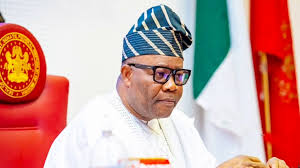
The Deal Before the Gavel
To understand Akpabio’s tenure, one must look at how he got the job. It is no secret that Akpabio was not the first choice of many senators-elect. However, President Tinubu ensured his emergence through a political deal struck long before the National Assembly election.
Reports indicate that Akpabio stepped down for Tinubu during the APC presidential primary in June 2022 in exchange for a promise: the Senate Presidency. This transactional genesis is critical. A Senate President who owes his gavel not to the independence of the legislature but to a pre-election pact with the executive is structurally compromised from day one. Tinubu even reportedly overruled party zoning arrangements that favoured the North, insisting on Akpabio, a Christian from the South-South, to balance the Muslim-Muslim ticket, with Senator Barau Jibrin as Deputy. This imposed leadership settled the matter, leaving no room for the legislature to choose its own leader freely.
The “Rubber Stamp” Ideology
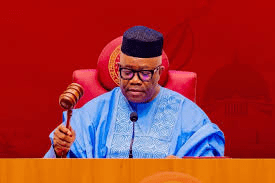
Akpabio has been remarkably candid about his governance philosophy. He has publicly declared that senators were not elected to “fight” the executive, arguing that constituents did not give lawmakers “boxing gloves”. He frames this as mature governance, contrasting it with the “chaotic theatrics” of the past. However, this rhetoric masks a troubling reality: the near-total abdication of oversight.
During a retreat in October 2023, Akpabio explicitly urged the Senate to “support President Tinubu’s development plans,” describing the President’s agenda as an “audacious plan” unmatched since Nigeria’s founding fathers. Similarly, during the 2026 budget presentation, he argued that “nations advance when the Executive and the Legislature work in concert, and they falter when the two become locked in hostility”.
This is a false dichotomy. Effective oversight is not “hostility”; it is the bedrock of accountability. By equating scrutiny with sabotage, Akpabio has redefined the legislature’s role as merely a conveyor belt for executive requests. While he points to the passage of the Student Loan Act and the Minimum Wage Act as achievements of synergy, these are executive bills that received expedited passage with minimal legislative input or debate. Passing the president’s agenda quickly is not governance; it is errand-running. A healthy democracy requires a legislature that amends, questions, and sometimes rejects executive proposals. Under Akpabio, the Senate has done little of the latter.
The Assault on Representation: The Natasha Case
The most damning evidence of Akpabio’s authoritarian turn is the treatment of Senator Natasha Akpoti-Uduaghan (Kogi Central). What began as a dispute over a seating arrangement escalated into a full-blown democratic crisis, exposing Akpabio’s willingness to destroy a political opponent using “Senate rules.”
In March 2025, Akpoti-Uduaghan was suspended for six months following a face-off with Akpabio over a change in her allocated seat. Critics allege the suspension was retaliatory; the senator had accused Akpabio of making sexual advances towards her, allegations the Senate dismissed but which the leadership seemed keen to bury through punitive action.
The suspension was so excessive that a Federal High Court in Abuja ordered her immediate recall in July 2025. Justice Binta Nyako described the six-month ban as “excessive,” noting that suspending a lawmaker for the entire sitting calendar effectively silences an entire constituency, denying them their constitutional right to representation. The court ruled that the Senate rules violated the constitution by failing to specify a maximum suspension period.
Yet, Akpabio’s response was not compliance but contempt. The Senate leadership refused to obey the court order. Armed with an Appeal Court ruling that technically affirmed the Senate’s authority to discipline members, the leadership maintained the suspension and, according to opposition parties, attempted to block her resumption even after the court order.
This is not oversight; this is political gangsterism. By manipulating the Senate rules to silence a female colleague who dared to challenge his authority, and then ignoring a judicial pronouncement, Akpabio has shown that he values loyalty to the “Villa” over the principles of natural justice and gender equity.
The Plot Against New Entrants: Rule Manipulation
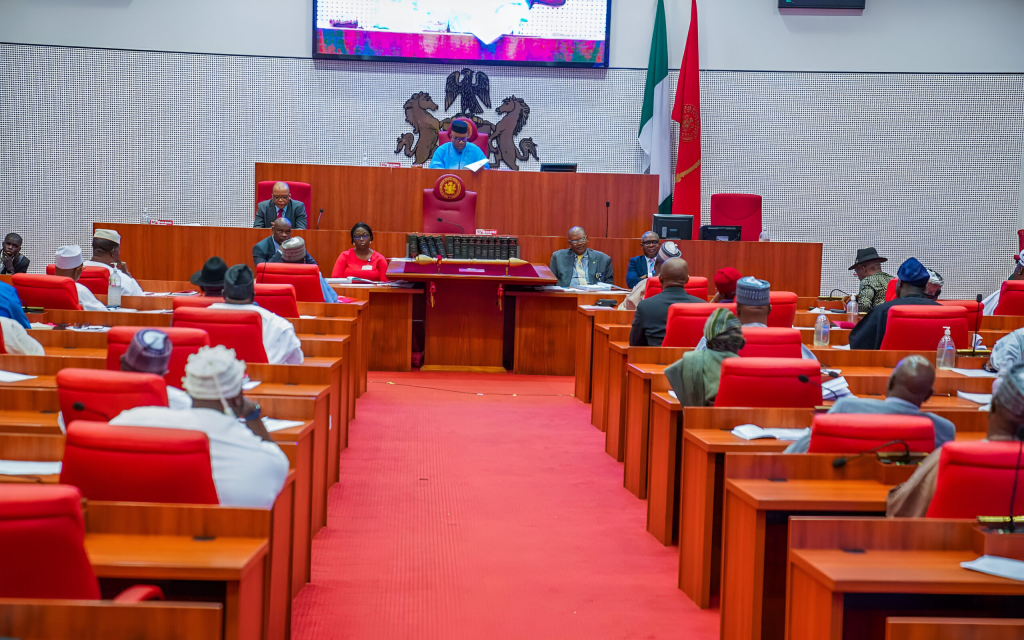
Beyond the Natasha saga, Akpabio has attempted to rig the legislative game from within. Reports indicate he sought to amend the Senate Standing Rules specifically to bar newly elected senators from holding certain principal offices. This manoeuvre, which occurred quietly while the public was distracted, is a classic anti-democratic tactic: changing the rules after the game has started to disadvantage newcomers who might challenge the status quo.
If successful, such amendments would entrench the power of Akpabio’s loyalists and prevent fresh voices from ascending to committee chairmanships or leadership roles. It is an attempt to create a permanent oligarchy within the Red Chamber, ensuring that only those willing to bow to the executive’s agenda rise through the ranks.
The Verdict: A Crisis for Democracy
Is this healthy for democracy? Absolutely not.

A legislature that facilitates every executive request without scrutiny is not a parliament; it is a decree-writing shop with a public relations budget. The role of the Senate in a presidential system is to serve as a check on executive power. When that check is removed, the country drifts toward authoritarianism. If President Tinubu has good policies, they should survive legislative scrutiny. The fact that Akpabio feels the need to fast-track everything and silence critics suggests a fear of that very process.
Furthermore, Akpabio’s indifference to the welfare of Nigerians is palpable. While he praises the “Nigeria First” policy, Nigerians are grappling with the worst cost-of-living crisis in a generation. While he tells citizens to “hold their lawmakers accountable,” he ensures that those lawmakers have no power to hold the executive accountable. It is a classic misdirection: asking the populace to scrutinize the foot soldiers while protecting the general from any oversight whatsoever.
Conclusion
Godswill Akpabio appears to serve one master: Bola Ahmed Tinubu. His tenure is a case study of how a legislature can be hollowed out from within, not by military coup, but by a complicit leadership that uses “rules” as a weapon and “collaboration” as a cover for subservience. For Nigerian democracy to survive, the Senate must reclaim its independence. If the Red Chamber remains content to be the rubber stamp of the Villa, then the Nigerian people must prepare for a future where their voices are not just ignored, but legislated into silence.
The Searchlight is an independent publication committed to holding power to account.


Leave a comment