By The Searchlight Correspondent / May 7, 2026
The most insidious parallel between Nigeria today and Duvalier’s Haiti lies in the concept of disappearance, not just of persons, but of political alternatives. Under Papa Doc, opposition parties did not lose elections; they simply ceased to exist as functional entities. The same mathematics is now being applied in Nigeria.
The “new mathematics of ballot exclusion,” as Independent Newspaper has termed it, operates on a simple premise: if you cannot defeat an opposition party at the polls, incapacitate it before the campaign begins. The formula requires three elements: a disgruntled internal party member willing to file a lawsuit; a judiciary that issues or interprets orders in ways that create prolonged uncertainty; and an Independent National Electoral Commission (INEC) that, while citing judicial directives, implements decisions that effectively freeze opposition party activities.
Consider the case of the African Democratic Congress (ADC). When former Senate President David Mark assumed interim leadership of the party in July 2025, INEC recognized the leadership. Almost immediately, a lawsuit was filed by Nafiu Bala Gombe, a former Deputy National Chairman, seeking to restrain INEC from recognizing the Mark-led leadership.
The ADC has publicly accused the APC of orchestrating the litigation, alleging that the names used in the suit “were neither in the ADC physical nor digital registers”. The party described the move as “desperation” by a ruling party elected to govern over 200 million people, now reduced to “shopping for the names of its citizens in pursuit of Machiavellian politics”.
On March 12, 2026, the Court of Appeal dismissed an appeal by the Mark-led ADC and ordered all parties to maintain the “status quo ante bellum”, the situation before the lawsuit was filed. Citing this order, INEC removed the names of the Mark-led National Working Committee from its portal and announced it would “refrain from taking any step or doing any act capable of foisting a fait accompli on the court”.
The effect has been to render the ADC leaderless and unable to function as a political party. By the time the substantive suit is resolved, perhaps months or even years later, the window for ballot printing may have closed. Party primaries may have been missed. And the opposition may find itself excluded from the election entirely, not through a direct court order disqualifying its candidates, but through the cumulative effect of judicial and administrative paralysis.
A United Nations representative has raised alarm, comparing current tactics to the legal manoeuvre that preceded the annulment of the June 12, 1993 election, warning that “if opposition parties are systematically crippled, then elections lose their meaning and become mere formalities rather than genuine contests”.
The Corrupted Temple: The Judiciary as an Instrument of the Executive

No analysis of Nigeria’s descent into Duvalierism would be complete without addressing the role of the judiciary. Under Papa Doc, Haitian courts were extensions of the presidential will. Judges who ruled against the regime were removed; those who complied were rewarded. Today, Nigeria’s courts, once the last hope of the common man, are increasingly being transformed into the same kind of subservient institution.
The ADC case is instructive. The Court of Appeal’s “status quo ante bellum” order effectively froze the party’s operations. As Independent Newspaper notes, “the commission’s position, while legally defensible, has a predictable political consequence: a major opposition party is incapacitated as the 2027 election cycle approaches”.
But the ADC is not alone. In August 2025, INEC invalidated candidates from the Julius Abure-led faction of the Labour Party, excluding the party from by-elections. The Movement for Credible Elections has accused INEC of working with the APC and “elements of the judiciary to undermine opposition parties ahead of the 2027 general elections,” alleging “an emerging alliance aimed at excluding opposition parties and candidates from the ballot”.
The pattern is unmistakable. When the executive cannot achieve its goals through legislation or electoral competition, it turns to the courts. And the courts, whether through genuine legal reasoning or calculated compliance, deliver outcomes that serve the ruling party’s interests.
The Roads Not Yet Taken: What History Teaches Us
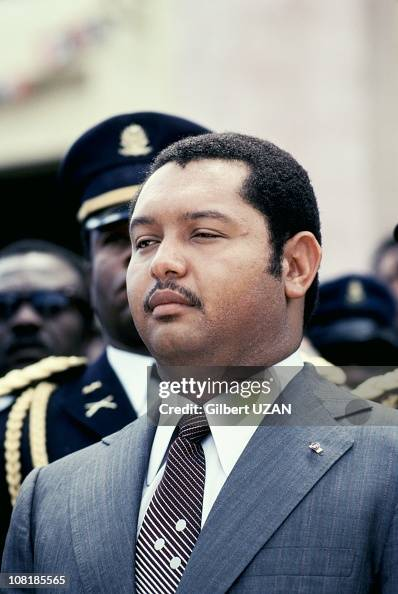
François “Papa Doc” Duvalier ruled Haiti for fourteen years. He died in office, passing the presidency to his nineteen-year-old son, Jean-Claude “Baby Doc” Duvalier, who ruled for another fifteen years. The Duvalier dynasty lasted nearly three decades. When it finally fell, Haiti was the poorest nation in the Western Hemisphere, its economy looted, its institutions hollowed, its people traumatized.
Nigeria is not Haiti. Our population is larger, our economy more diversified, our civil society more robust. But the trajectory is disturbingly similar. We are watching a ruling party transform the state into a weapon. We are watching security forces become partisan actors. We are watching critics disappear. We are watching opposition parties litigated into paralysis. We are watching the judiciary become a handmaiden of executive power.

The APC may believe that these tactics will secure its victory in 2027. They may be correct in the short term. But the long-term consequences are catastrophic. When citizens cannot trust the police, when judges become politicians in robes, when critics vanish for speaking truth, and when the ballot box is preceded by the gavel and the midnight knock, then democracy is already dead.
Conclusion: The Searchlight Does Not Fear the Dark
We at The Searchlight have not forgotten our mandate. We are not here to comfort the powerful. We are here to expose them.
The emerging political situation in Nigeria is not a failure of democracy; it is a deliberate assault on democracy. The APC, under President Bola Tinubu, is constructing a Duvalierist state, a state where corruption buys loyalty, where security forces terrorize citizens, where critics disappear into the void, where courts serve the throne, and where opposition is not defeated but erased.
We name this for what it is. We call on the Nigerian people to see the pattern before it is complete. We call on the international community to pay attention before silence becomes complicity. And we call on every citizen who still believes in Nigeria, in the Nigeria that could be, not the Nigeria that is being built by frightened men in power, to resist, to speak, and to refuse to disappear.
The Tonton Macoutes knocked at midnight. But the people of Haiti eventually knocked back. The question for Nigeria is simple: will we wait until the knock comes for us?


Leave a comment