y The Searchlight Investigative Desk / May 7, 2026
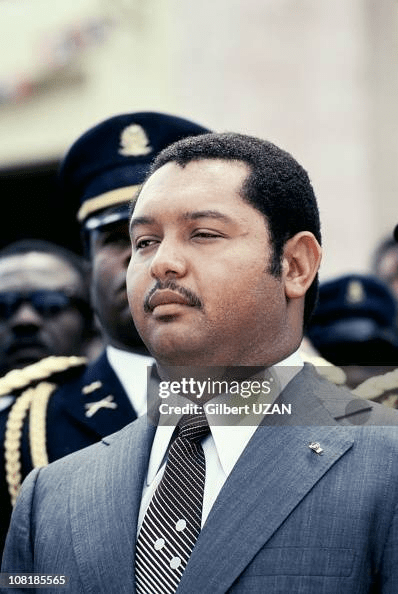
There is a ghost that haunts the Caribbean, the spectre of François “Papa Doc” Duvalier, the Haitian dictator who ruled from 1957 to 1971 through a lethal cocktail of corruption, state terror, and the systematic annihilation of political opposition. For decades, Nigeria looked at Haiti as a distant cautionary tale, a warning from history about where unchecked executive power leads. Yet, as we survey the political landscape of Nigeria in 2026, the ghost is no longer abroad. It has taken residence in Aso Rock.
The emerging political situation in Nigeria bears chilling, unmistakable parallels to the Duvalier regime. What we are witnessing is not merely authoritarian drift; it is the deliberate construction of a Duvalierist state, where corruption is the currency of loyalty, where security forces answer only to the throne, where critics vanish into the night, and where the opposition is not defeated at the polls but extinguished before the race begins.
The Sanctuary of the Corrupt: The APC as an Amalgam of Predators
Papa Doc Duvalier understood a fundamental truth about authoritarian survival: a dictator is only as secure as the number of powerful people who cannot afford to see him fall. He built his regime by welcoming the corrupt, the compromised, and the desperate into his inner circle, ensuring their loyalty through mutual complicity. Today, the All Progressives Congress (APC) has become the exact same sanctuary.
The party has transformed into what one analyst described as a “magnet for defectors fleeing scandal and electoral defeat”. In Akwa Ibom State, the APC recently suspended its own treasurer, Ukobong Ibekwe, for the remarkable offence of maintaining simultaneous membership in both the APC and the Peoples Democratic Party (PDP), collecting stipends from both payrolls while attending strategic meetings of both parties. This is not an isolated incident of double-dealing; it is a symptom of a party that has become a revolving door for politicians with flexible loyalties and flexible ethics.
Governor Umo Eno himself admitted that most of his appointees who defected from the PDP to the APC “were still loyal to the PDP” while occupying positions in the ruling party. The APC has become the political equivalent of a money-laundering operation, a place where compromised individuals go to sanitize their careers while continuing to serve their original masters. In Duvalier’s Haiti, this was called *clientele*. In Tinubu’s Nigeria, it is called realignment.
The consequences are predictable. When a governing party is built on defectors with divided loyalties and transactional motivations, governance becomes secondary to survival. Policy becomes secondary to patronage. And the Nigerian people, the actual constituents who elected these politicians (or so it seems), become secondary to the calculus of who stays in power.
The Muzzled Citizen: Disappearing Critics and the Chilling Effect
Under Papa Doc, the most feared words in Haiti were ‘raket, the knock on the door at midnight. The Tonton Macoutes, Duvalier’s paramilitary death squad, operated with impunity, snatching citizens who dared criticise the regime. Many were never seen again. Today, Nigeria is learning the same vocabulary of terror.

On April 28, 2026, an Abuja-based social media critic, Justice Mark Chidiebere, known to his followers as “Justice Crack”, left his home after receiving a phone call. He told his wife he was going to a meeting. He never returned.
Chidiebere had been vocal in the days before his disappearance. He had released a video criticizing the Nigerian Army over the poor welfare of troops on the front lines. He had questioned the Army’s official account of the death of a National Youth Service Corps member, Abdulsamad Jamiu, who was shot dead in Abuja under circumstances the Army attributed to a “stray bullet” during a crossfire between soldiers and armed robbers. For these acts of digital citizenship, for speaking truth to power, Justice Crack vanished. His wife, Theresa Chidiebere, has been left in agony. “My husband is not a criminal,” she said at a briefing. But in the logic of the emerging Duvalierist state, a critic is a criminal. The last tracked location of Justice Crack’s phone was the Nigerian Army Officers Wives Association Shopping Complex in Asokoro, Abuja, a military facility. While the Army later confirmed his arrest, claiming he was being investigated for “subversion” and “incitement,” the initial days of silence followed a familiar pattern: denial, obfuscation, and the slow realization that a citizen had been swallowed by the state.
The Rule of Law and Accountability Advocacy Centre (RULAAC) has described Chidiebere’s disappearance as bearing “patterns historically associated with unlawful detention and enforced disappearance”. Its executive director, Okechukwu Nwanguma, issued a stark warning: “Freedom of expression is a cornerstone of democracy. Where individuals who exercise this right disappear under suspicious circumstances, it signals a dangerous erosion of constitutional guarantees”.
How many others have disappeared without a public outcry? How many critics have received midnight knocks and are now held in facilities whose locations the state will not disclose? In Duvalier’s Haiti, the Tonton Macoutes kept no records of their abductions, ensuring plausible deniability. In Nigeria, the military and the Department of State Services (DSS) are learning the same lesson: what the state does not acknowledge, the citizens cannot challenge.
The Uniformed Praetorians: Security Forces at Political Beck and Call
Papa Doc’s power rested on the *Tonton Macoutes*, a militia that was simultaneously part of the state and above the law. They were the regime’s fist. Today, Nigeria’s armed forces and police are being rapidly transformed into the same kind of praetorian guard, answerable not to the Constitution, not to the citizens, but to the political interests of the APC.
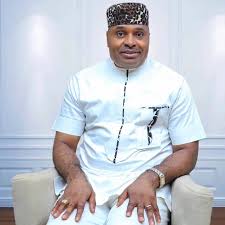
Kenneth Okonkwo, a Nollywood actor turned politician and chieftain of the African Democratic Congress (ADC), has provided damning testimony of how security agencies are being weaponized against the opposition. Speaking on Arise Television’s Morning Show, Okonkwo alleged that ADC gatherings in Kaduna, Lagos, and Ekiti States have been repeatedly disrupted by thugs “acting under the supervision of security agencies”.
“The APC is using every arm of government to frustrate others,” Okonkwo charged. “It’s against the provisions of the Electoral Act that every political party should enjoy equal protection”. He accused the ruling party of “manipulating security institutions to frustrate opposition parties,” turning the constitutional mandate of state protection into a partisan weapon.
This is not hyperbole. When thugs disperse opposition meetings while uniformed officers watch, or worse, facilitate the dispersal, the social contract is broken. The citizen no longer looks to the police as protectors but as partisans. And once that trust evaporates, the only remaining currency is fear.
The most chilling evidence of the militarization of politics came in April 2026, when the Federal Government filed a 13-count treason charge against seven individuals, including a retired Major General, Mohammed Ibrahim Gana; a retired naval captain, Erasmus Ochegobia Victor; and a serving police inspector, Ahmed Ibrahim. They are being charged for allegedly plotting to overthrow President Bola Tinubu.
The alleged coup plot first surfaced in October 2025, when the Federal Government abruptly cancelled the Independence Day parade. While the Defence Headquarters initially dismissed coup rumours, by January 2026, it confirmed that an investigation had “uncovered evidence of a coup conspiracy involving some military personnel”.
Whether the plot was real or manufactured is almost beside the point. What matters is the political effect. The government now has a ready-made narrative to justify the sweeping militarization of domestic politics. Every critic becomes a potential subversive. Every opposition meeting becomes a potential insurrection. The security forces, already inclined to see themselves as the ultimate arbiters of order, are being given carte blanche to act against citizens with impunity.


Leave a comment